
Technology, Training and the Future of Evacuation: How Powered Evacuation Chairs Are Changing Safety Planning
Evacuation has changed. For many years, emergency escape planning for people with reduced mobility relied heavily on standard evacuation chairs, manual handling, and the confidence of trained staff. These solutions still have an important place, but buildings, workplaces, schools, care environments, hotels and public venues now need a more advanced approach. Modern evacuation is no longer just about having equipment on a wall. It is about matching the right technology with the right training skill set, so every person can leave a building safely, respectfully and with confidence.
This is where the development of the Powered Evacuation Chair, the Powered Evac chair and the Powered Stairclimber has transformed the conversation.
The Evacuation Company has led the way by introducing non transferable powered evacuation stairclimbers to the market. This is a major step forward because it supports people who cannot easily or safely transfer from their own wheelchair into a traditional evacuation chair. For many wheelchair users, transfer is not simple. It can be uncomfortable, unsafe, undignified or medically unsuitable. In some cases, it is not possible at all.
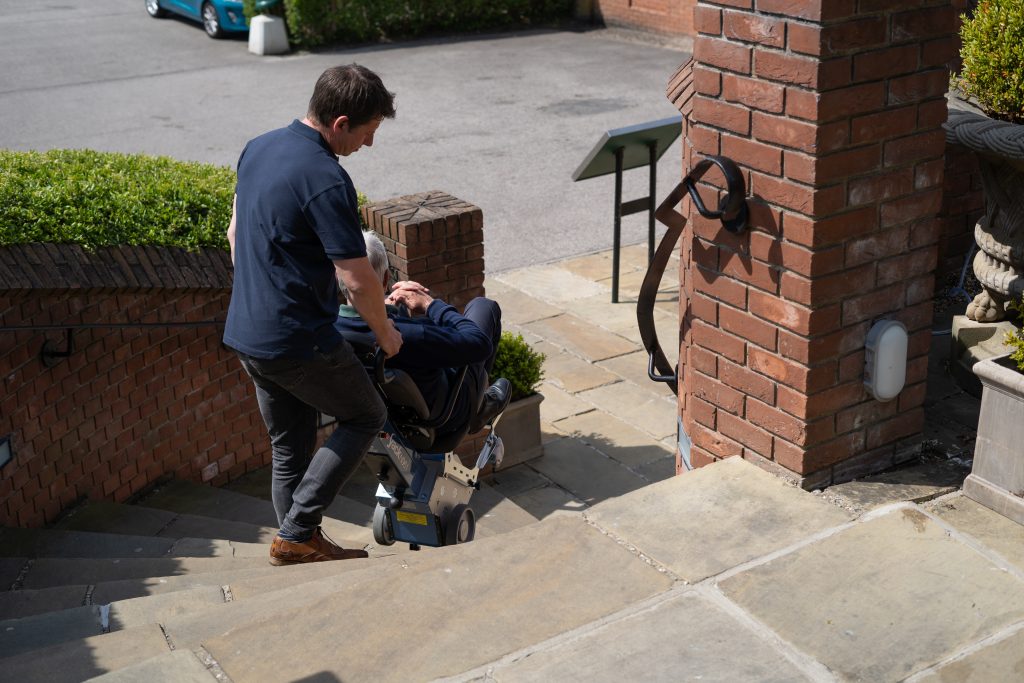
A non transferable Powered Stairclimber changes this. It allows evacuation planning to be built around the person, not just the staircase. It means the user can remain in their own wheelchair while trained staff operate specialist powered equipment to support movement on stairs. This brings together technology, dignity and compliance in a way that traditional methods often cannot.
The shift from manual evacuation to powered evacuation
Traditional evacuation chairs are widely used and, when applied correctly, they remain a valuable part of many fire evacuation plans. They are compact, cost effective and suitable for a wide range of buildings. However, they normally require the person to transfer into the chair. They also rely heavily on operator strength, confidence and regular training.
As buildings become more complex and as employers, schools and organisations take a more person centred approach to evacuation, the limits of a one size fits all solution are becoming clearer.
A Powered Evacuation Chair or Powered Evac chair offers a different level of support. Powered technology reduces the physical load on staff and improves control on staircases. A Powered stair climber can help move a wheelchair user up or down stairs with greater stability, especially where lift failure, fire alarm activation or access restrictions create a serious problem.
The key change is not just the motor. It is the thinking behind the equipment. Powered evacuation is about reducing manual handling risk, improving confidence and creating a safer experience for both the operator and the person being evacuated.
Why non transferable evacuation matters
One of the biggest advances in evacuation planning is the recognition that not every person can transfer. This is especially important for wheelchair users with complex needs, postural support requirements, pain, neurological conditions, anxiety, fatigue or medical equipment attached to their chair.
Asking someone to leave their own wheelchair during an emergency can create unnecessary distress. It may also place them at greater risk. A person’s wheelchair is often more than a seat. It is their mobility system, their posture support and their independence.
The Evacuation Company has helped lead this change by focusing on non transferable powered evacuation stairclimbers. These systems allow planning teams to consider the real needs of the individual. Instead of asking whether someone can fit the equipment, the question becomes: what equipment allows this person to be evacuated safely?
That is a much better starting point.
The rise of the Powered Stairclimber in evacuation planning
The Powered Stairclimber has moved from being seen as a mobility access product to becoming a serious evacuation solution. In many buildings, particularly older properties, listed buildings, schools, hotels, healthcare settings and city centre offices, lift access is not always reliable or available during an emergency.
A Powered stair climber gives organisations another option. It can support access in day to day situations and provide an evacuation route when lifts cannot be used. This makes it especially valuable for buildings where installing a platform lift or passenger lift is not practical.
For evacuation planning, this technology can support PEEPs, GEEPs, BEEPs and wider emergency procedures. It gives responsible persons and facilities teams a practical tool that can be matched to the layout of the building and the needs of the people inside it.
Technology has improved, but training is still everything
Better equipment does not remove the need for training. In fact, the more advanced the technology becomes, the more important the training skill set becomes.
A Powered Evacuation Chair or Powered Stairclimber must be used by trained staff who understand the equipment, the staircase, the person using it and the evacuation plan. Training should not be treated as a box ticking exercise. It should build real confidence.
Good training covers more than how to switch the equipment on. It includes assessing the stairs, positioning the user, communicating clearly, managing anxiety, understanding manual handling risks, working as a team and knowing when a different method is required.
The Evacuation Company places training at the centre of powered evacuation. The aim is not just to supply equipment. The aim is to make sure staff can use it safely, calmly and correctly when it matters.
Reducing risk for operators
One of the biggest benefits of powered evacuation technology is the reduction in operator strain. Traditional manual evacuation can be physically demanding, especially on long staircases, steep staircases or where the user is heavier. Even with good technique, staff can feel nervous if they have not practised regularly.
A Powered Evac chair or Powered stair climber gives the operator more support. The powered track or climbing system helps control movement on the stairs, reducing the reliance on strength alone. This can make evacuation planning more inclusive for staff teams as well, because the process becomes less dependent on the strongest person available.
This is an important point. Evacuation plans should not rely on luck, panic or physical strength. They should rely on proper assessment, suitable equipment and trained operators.
Improving dignity for the person being evacuated
Technology has also improved the experience for the person being evacuated. This matters.
Evacuation can be stressful for anyone, but for a wheelchair user or person with reduced mobility, it can feel especially vulnerable. Being transferred quickly, handled by multiple people or placed into unfamiliar equipment can increase fear and discomfort.
A non transferable Powered Stairclimber helps protect dignity by allowing the person to stay in their own wheelchair where appropriate. This can reduce anxiety and create a more controlled process. It also helps organisations show that they have considered the person as an individual, rather than relying on a generic plan.
Dignity should never be seen as separate from safety. The best evacuation solutions provide both.
The role of PEEPs and person centred planning
Personal Emergency Evacuation Plans, often known as PEEPs, are an essential part of evacuation planning for people who need additional support. A good PEEP should be practical, tested and understood by the people involved.
Powered evacuation technology can make PEEPs stronger because it gives organisations more realistic options. If a person cannot transfer, a standard evacuation chair may not be suitable. If a staircase is long, narrow or awkward, a manual system may place too much pressure on staff. If the building has no suitable lift during an emergency, a Powered Evacuation Chair or Powered Stairclimber may provide the missing link.
The Evacuation Company works with organisations to match the equipment and training to the environment. This is where experience is vital. The correct solution depends on the person, the building, the risk assessment and the staff team.
Why powered evacuation supports compliance
Compliance is not just about owning equipment. It is about proving that your evacuation process is suitable, reviewed and achievable.
A Powered Evac chair or Powered stair climber can support compliance by providing a safer and more considered method for evacuating people who cannot use stairs independently. It can also help organisations show that they have considered alternatives to manual handling and have taken reasonable steps to reduce risk.
However, equipment must be supported by training, servicing and clear procedures. This includes knowing where the equipment is stored, who can operate it, how often training is refreshed and how the plan works during lift failure or fire alarm activation.
A powered solution is strongest when it forms part of a complete evacuation strategy.
Schools, colleges and universities
Education settings are a major area where powered evacuation technology can make a real difference. Many schools and colleges support pupils and students with complex mobility needs. Some use powered wheelchairs or specialist seating systems that cannot easily be replaced by a standard evacuation chair.
A non transferable Powered Stairclimber can help education providers create safer evacuation routes without forcing unnecessary transfers. This is especially important in multi level buildings, older school estates and specialist education settings where access is not always straightforward.
Training is equally important in education. Staff need confidence, but they also need sensitivity. Students should not feel like a problem to be managed. They should feel included in the planning process and supported by a system that respects their needs.
Care homes and healthcare settings
Care homes, clinics and healthcare environments face their own challenges. Residents and patients may have limited mobility, frailty, pain, anxiety or medical conditions that make transfer difficult.
A Powered Evacuation Chair or Powered Stairclimber can help staff manage these situations with greater control. It can reduce manual handling pressure and support evacuation plans for people who need more than a basic solution.
In these settings, training needs to be practical and repeated. Staff turnover, shift patterns and changing resident needs mean evacuation planning must be kept alive. The technology is valuable, but only if the team knows how to use it.
Hotels, offices and public buildings
Hotels, offices and public buildings often have a wide range of visitors, staff and contractors. Not everyone who needs support will be known in advance. This is where GEEPs and building wide planning become important.
A Powered Evac chair or Powered stair climber can give facilities teams a more flexible option, especially in buildings where visitors may use wheelchairs or where lift failure could leave someone unable to exit safely.
For hotels, dignity and reassurance are vital. Guests expect safety systems to be discreet, professional and effective. Powered evacuation equipment allows hotels to move beyond a basic tick box approach and offer a more capable level of support.
Heritage and older buildings
Older buildings often create the hardest access and evacuation challenges. Listed properties, heritage venues, museums and historic hotels may have narrow staircases, split levels and restrictions on permanent building adaptations.
A Powered Stairclimber can be especially useful in these environments. It provides a mobile solution without requiring major structural change. It can support day to day access as well as emergency planning, making it a practical alternative where lifts or platform lifts are not suitable.
The training skill set in these buildings is especially important because each staircase may behave differently. Operators need to understand turning points, landings, gradients, storage and safe routes.
Why The Evacuation Company has led the way
The Evacuation Company has taken a forward thinking approach by recognising that evacuation needs have changed. The market needed more than standard evacuation chairs. It needed powered solutions, non transferable options, proper training and real building based assessment.
By introducing non transferable powered evacuation stairclimbers, The Evacuation Company has helped move the sector towards a more inclusive and practical future. This is not just about having newer equipment. It is about changing the standard of what good evacuation planning should look like.
A modern evacuation provider should understand equipment, training, compliance, manual handling, disability access and the real pressures faced by organisations. The Evacuation Company brings these areas together.
The future of evacuation
The future of evacuation will be more personal, more technology led and more training focused. Standard evacuation chairs will still have a role, but they will sit alongside Powered Evacuation Chairs, Powered Evac chairs and Powered Stairclimbers as part of a wider safety strategy.
The best organisations will not wait until an incident exposes a weakness. They will review their evacuation plans now. They will ask whether their current equipment works for wheelchair users who cannot transfer. They will ask whether staff are confident. They will ask whether the plan is realistic during lift failure, night shifts, busy events or high occupancy periods.
Technology has advanced. Training has advanced. Expectations have advanced too.
A Powered Stairclimber or Powered stair climber is no longer a specialist extra for rare situations. For many buildings, it is becoming an essential part of inclusive evacuation planning.
Final thoughts
Evacuation is about people. It is about making sure that every person has a safe, realistic and dignified way out of a building in an emergency. Technology can make that possible, but only when it is matched with expert assessment and proper training.
The Evacuation Company has led the way with non transferable powered evacuation stairclimbers, helping organisations move beyond basic compliance and towards safer, more inclusive emergency planning.
For any business, school, care home, hotel, public building or heritage site reviewing its evacuation procedures, now is the time to look closely at powered evacuation. A Powered Evacuation Chair, Powered Evac chair or Powered Stairclimber could be the difference between a plan that exists on paper and a plan that works in real life.
Key Takeaways
- Powered Evacuation Chairs improve evacuation plans for individuals with reduced mobility by allowing them to remain in their wheelchairs during emergencies.
- Traditional evacuation methods often place too much reliance on physical strength, while powered solutions reduce risk and enhance control.
- Dignity and individual needs should be prioritized in evacuation planning, making Powered Evacuation Chairs a more humane option.
- Training is critical; staff must understand the technology and evacuation plans to respond effectively in emergencies.
- The Evacuation Company leads the way in integrating technology and training, ensuring safer and more inclusive evacuation for all.
Estimated reading time: 11 minutes