
How Technology and Training Have Transformed Evacuation in London Buildings
London is home to some of the most diverse buildings in the UK. From modern commercial towers in the City to listed heritage buildings in Westminster, luxury hotels in Mayfair, universities, hospitals, schools and residential developments, every building presents its own evacuation challenges. As expectations around accessibility continue to grow, evacuation planning has evolved beyond simply having an evacuation chair available. Today, organisations are expected to consider how every occupant can be evacuated safely, efficiently and with dignity.
Technology has played a significant role in this evolution. The introduction of the Powered Evacuation Chair, the Powered Evac chair and the Powered Stairclimber has transformed how organisations approach emergency evacuation. Combined with improved operator training and building-specific evacuation planning, these technologies are helping London buildings become safer and more inclusive than ever before.
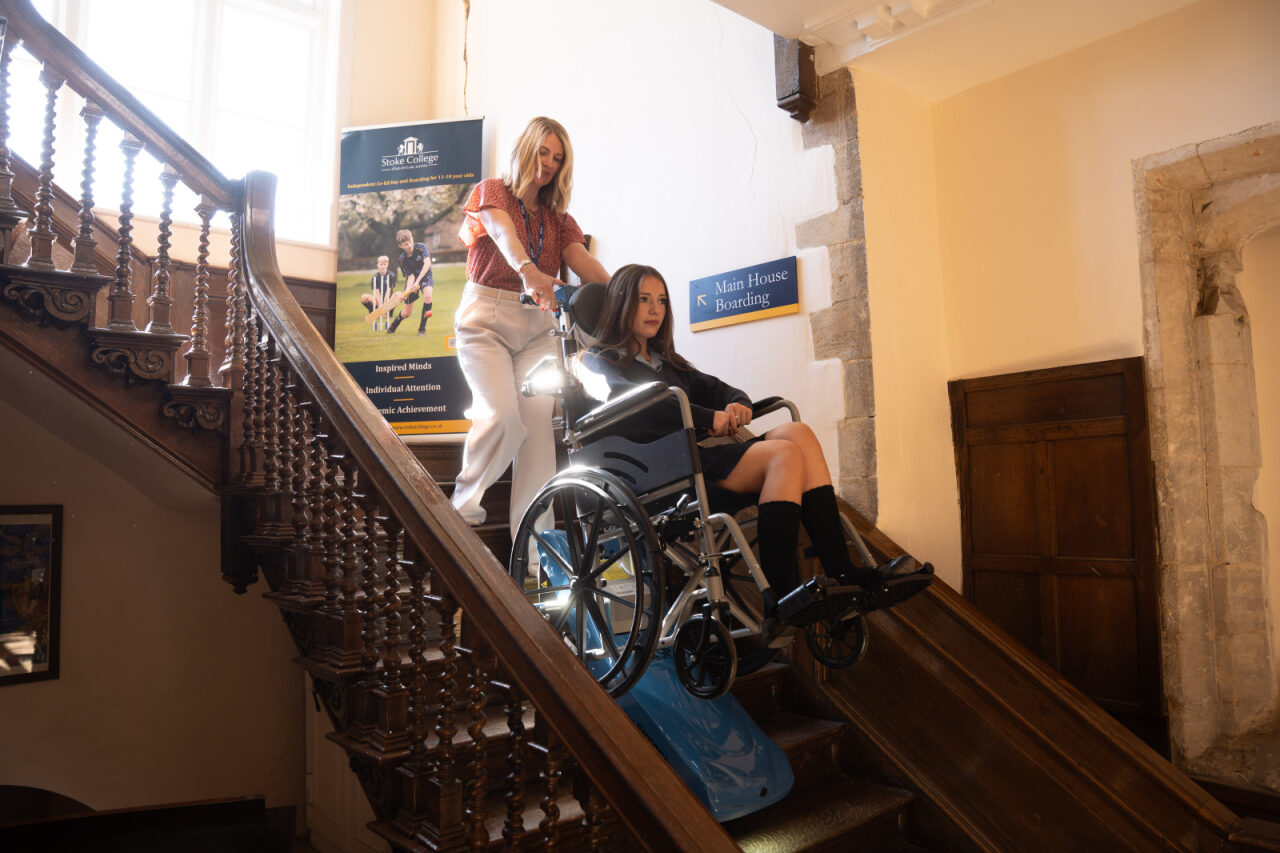
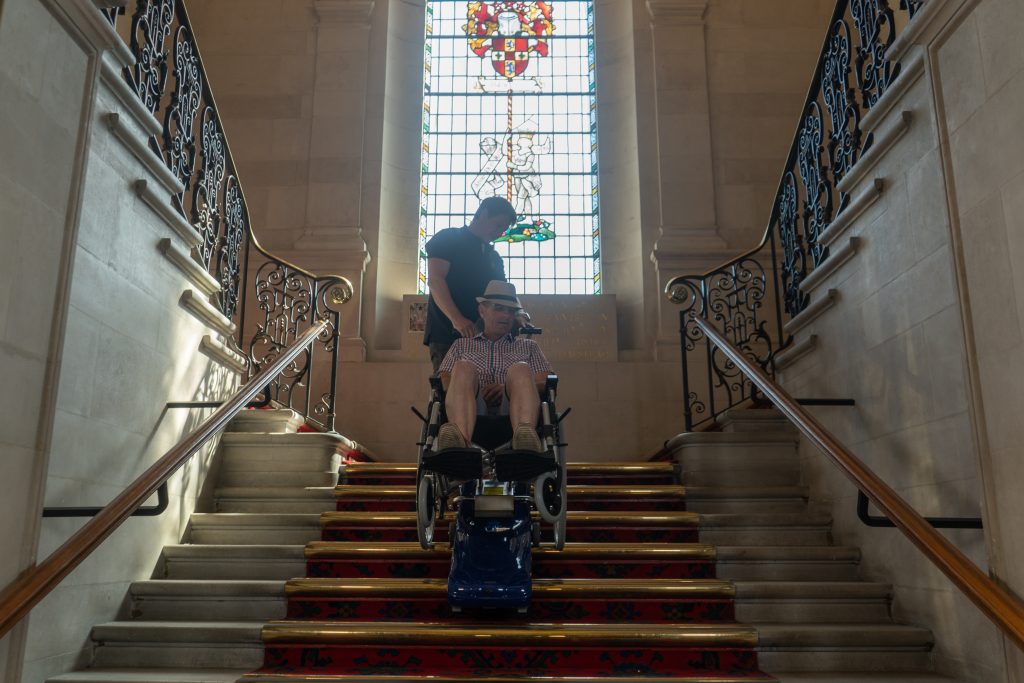
The Evacuation Company has been at the forefront of this change by introducing non transferable powered evacuation stairclimbers to the UK market. This innovative approach allows many wheelchair users to remain in their own wheelchair during an evacuation, removing the need for unnecessary transfers and creating a safer, more dignified solution for both the individual and the operators.
Why London Buildings Need a Different Approach
Few cities present the variety of evacuation challenges found across London. The capital contains thousands of multi-storey office buildings, hotels, universities, museums, hospitals, theatres and historic properties. Many were built long before modern accessibility standards existed.
Although many newer developments include accessible lifts, these cannot normally be used during a fire or other emergency. Suddenly, staircases become the only means of escape, making evacuation planning critical for anyone unable to use the stairs independently.
Traditional evacuation chairs continue to play an important role in many London buildings. However, they are not always suitable for everyone. Many wheelchair users cannot safely transfer from their own wheelchair into an evacuation chair due to medical conditions, posture requirements or limited mobility.
This is where the Powered Stairclimber has become one of the biggest developments in evacuation planning.
The Evolution from Manual Evacuation to Powered Technology
Only a few years ago, evacuation largely depended upon manual evacuation chairs and physically demanding handling techniques. While these systems remain effective when properly used, they rely heavily on operator strength, confidence and frequent practical training.
Modern Powered Evacuation Chairs and Powered Stairclimbers have dramatically changed this.
Powered technology provides significantly greater control on staircases while reducing physical effort for operators. This is particularly valuable in London’s tall office buildings, hospitals and hotels where lengthy stair descents may be required.
Rather than relying purely on manual handling, powered systems assist movement down stairs while maintaining stability throughout the evacuation process.
This benefits everyone involved.
The operator experiences less physical strain.
The person being evacuated experiences a smoother and more controlled journey.
The organisation benefits from a safer evacuation strategy.
The Importance of Non Transferable Evacuation
Perhaps the greatest advancement has been the introduction of non transferable Powered Stairclimbers.
For many wheelchair users, transferring into another chair during an emergency simply isn’t practical.
Some individuals use customised wheelchairs designed specifically around their posture.
Others rely upon specialist seating systems.
Many experience chronic pain, muscle weakness or neurological conditions which make transferring extremely difficult.
Asking these individuals to leave their wheelchair during an emergency may increase both physical and emotional distress.
The Evacuation Company recognised this challenge and introduced non transferable powered evacuation stairclimbers which allow many users to remain safely within their own wheelchair throughout the evacuation.
This represents a significant step forward in accessible evacuation planning for London buildings.
London’s Fire Safety Expectations Continue to Grow
Responsible Persons across London now face greater expectations than ever before when developing evacuation strategies.
Following the recommendations arising from the Grenfell Tower Inquiry and subsequent changes to UK fire safety legislation, evacuation planning has become far more person centred.
Organisations are increasingly expected to demonstrate that their procedures genuinely work rather than simply existing on paper.
Having a Powered Evacuation Chair available is only one part of the process.
Staff must understand:
• when equipment should be used
• who requires assistance
• how equipment operates
• how to communicate throughout the evacuation
• how to reduce manual handling risks
• how to maintain equipment
• how Personal Emergency Evacuation Plans integrate with building procedures
This is why technology alone is never enough.
Training remains equally important.
Better Equipment Requires Better Training
The most advanced Powered Evac chair in the world is only effective if operators know how to use it confidently.
Training today is considerably more advanced than it was even a decade ago.
Modern evacuation training focuses upon realistic building scenarios rather than simply demonstrating equipment.
Operators learn how different staircases behave.
They understand communication techniques.
They practise teamwork.
They develop confidence through repetition.
The Evacuation Company has invested heavily in practical operator training because equipment and competence must always work together.
Confidence cannot be achieved through online videos alone.
It comes from practical experience.
Reducing Manual Handling Risks
Manual handling has always been one of the biggest concerns during emergency evacuation.
Large office buildings across Canary Wharf, the City of London and Westminster may require operators to descend numerous flights of stairs carrying significant weight.
Powered Stairclimbers substantially reduce this physical demand.
Instead of relying entirely on operator strength, powered climbing systems manage much of the movement.
This reduces fatigue.
It improves consistency.
Most importantly, it helps reduce risk for both operators and wheelchair users.
Dignity Should Never Be Overlooked
Emergency evacuation is naturally stressful.
However, for wheelchair users, being transferred away from familiar equipment can create additional anxiety.
Remaining in a personal wheelchair whenever appropriate provides reassurance.
It maintains posture.
It supports independence.
It preserves dignity.
This person centred approach reflects how evacuation planning continues to evolve across London.
The conversation is no longer simply about removing people from buildings.
It is about doing so safely, respectfully and professionally.
Supporting London’s Commercial Sector
London contains one of Europe’s largest concentrations of commercial office space.
Financial institutions.
Legal firms.
Technology companies.
Government departments.
International headquarters.
Many occupy buildings exceeding twenty storeys.
These organisations increasingly recognise that Powered Evacuation Chairs and Powered Stairclimbers provide practical solutions which complement existing evacuation strategies.
Combined with structured staff training and regular equipment servicing, powered evacuation technology provides greater resilience during emergencies.
Supporting London’s Education Sector
Schools, colleges and universities throughout London continue to welcome increasing numbers of students with complex mobility needs.
Educational providers require evacuation procedures which support every learner equally.
Powered Stairclimbers allow many students to remain within their own wheelchair while being evacuated, removing unnecessary transfers and creating far more inclusive emergency planning.
The Evacuation Company works extensively across London’s education sector to assess buildings, deliver training and develop practical evacuation solutions that work in real educational environments.
Supporting Healthcare Across London
Hospitals, clinics and care homes face particularly demanding evacuation challenges.
Residents and patients often have multiple health conditions alongside reduced mobility.
Powered Evac chairs and Powered Stairclimbers provide greater control while reducing manual handling pressures on healthcare staff.
Combined with regular practical training, these technologies help organisations prepare for emergencies while protecting both patients and caregivers.
Supporting Heritage Buildings
London’s heritage buildings present unique evacuation challenges.
Historic hotels.
Museums.
Theatres.
Listed government buildings.
Palaces.
Many cannot easily accommodate permanent lifts or extensive structural alterations.
Powered Stairclimbers provide an excellent alternative.
They require no major building modifications while allowing accessibility and emergency evacuation to improve dramatically.
This makes them particularly valuable throughout Westminster, Kensington, Chelsea, Greenwich and the City of London.
Why The Evacuation Company Leads the Market
The Evacuation Company recognised that the future of evacuation would not rely solely upon traditional evacuation chairs.
By introducing non transferable powered evacuation stairclimbers, investing heavily in operator training and delivering building-specific assessments, the company has helped redefine what modern evacuation planning looks like.
Rather than supplying equipment alone, The Evacuation Company provides complete evacuation strategies including assessments, equipment selection, operator training, servicing, PUWER inspections and ongoing support.
For organisations across London, this means working with a specialist who understands both the technology and the practical realities of emergency evacuation.
The Future of Evacuation in London
London’s buildings will continue to evolve.
Fire safety legislation will continue to develop.
Accessibility expectations will continue to rise.
The organisations that invest today in Powered Evacuation Chairs, Powered Evac chairs, Powered Stairclimbers and high-quality operator training will be far better prepared for tomorrow’s challenges.
Modern evacuation is no longer about minimum compliance.
It is about creating buildings where everyone can leave safely, regardless of mobility.
That is why The Evacuation Company continues to lead the sector by combining advanced technology, practical training and genuine expertise to deliver safer evacuation solutions throughout London, helping businesses, public organisations and building owners protect people while meeting the highest standards of accessibility and emergency preparedness.
Key Takeaways
- London’s diverse buildings require tailored evacuation strategies to address unique challenges, particularly for individuals with mobility needs.
- The Powered Evacuation Chair and Powered Stairclimber enhance evacuation safety and dignity, enabling many wheelchair users to remain in their own wheelchairs during emergencies.
- Training plays a crucial role alongside technology, ensuring operators understand equipment use and evacuation procedures thoroughly.
- The Evacuation Company leads the market by offering non-transferable evacuation solutions, practical operator training, and comprehensive evacuation planning.
- As fire safety expectations grow, investing in advanced evacuation technologies and robust training prepares organizations for future challenges.
Estimated reading time: 8 minutes