
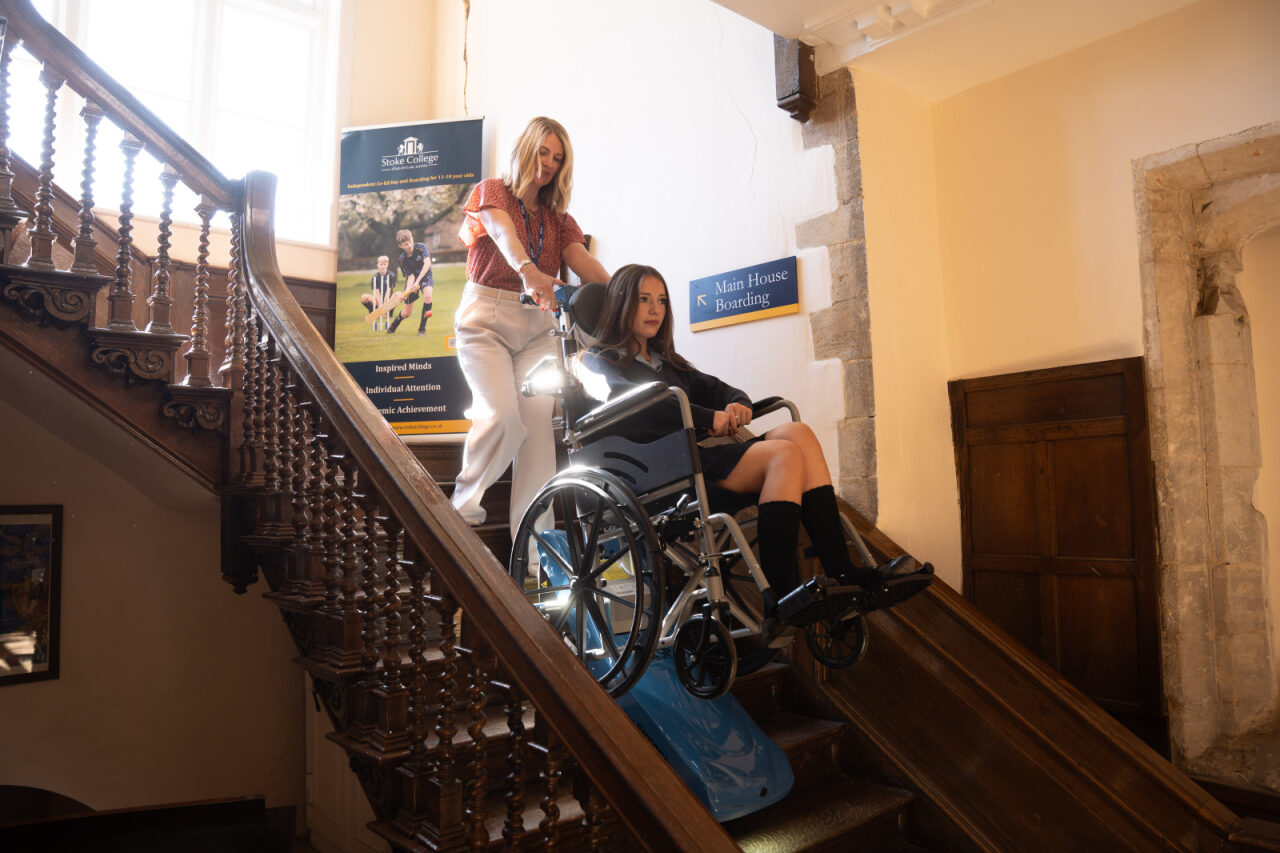
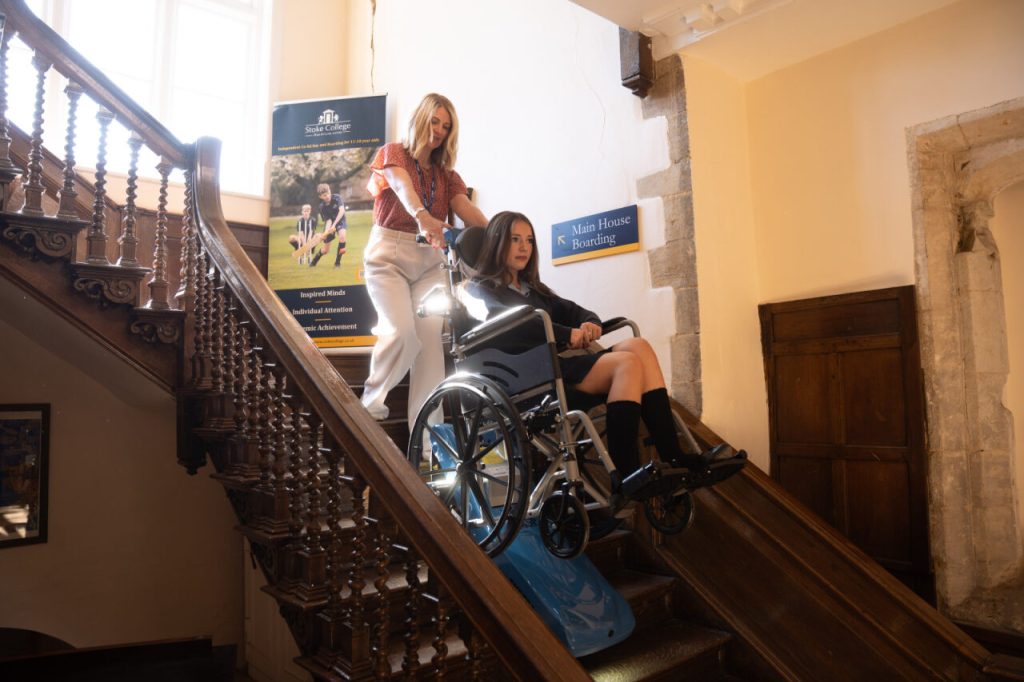
The Complete Guide to Powered Evacuation Chairs in the UK (2026)
Secondary Keywords: Powered Evacuation Chairs, Powered Evac Chair, Powered Stair Climber, Powered Stairclimber, Stair Climber for Evacuation, Evacuation Chair, Powered Evacuation Chair Training
Part 1
The Complete Guide to Powered Evacuation Chairs in the UK
Ensuring everyone can leave a building safely during an emergency has never been more important. As buildings become taller, more complex and increasingly focused on accessibility, organisations are recognising that traditional evacuation methods are not always enough. A Powered Evacuation Chair offers a safer, more controlled solution for evacuating people with reduced mobility, while also reducing the physical demands placed on operators.
Across schools, universities, hospitals, care homes, offices, hotels and public buildings, responsible persons are reassessing how they plan for emergency evacuation. This shift is being driven by changes in legislation, increased awareness of inclusive design and a growing understanding that emergency planning should protect every building occupant with dignity and confidence.
Powered Evacuation Chairs are now playing a central role in this process. Unlike traditional evacuation chairs that rely heavily on operator strength and gravity, powered solutions use advanced stair climbing technology to provide controlled movement both up and down stairs. This significantly improves operator safety, enhances passenger comfort and allows organisations to plan for a much wider range of emergency scenarios.
At The Evacuation Company, we have seen first-hand how powered stair climbing technology has transformed evacuation planning. Working with schools, NHS Trusts, universities, commercial property owners, hotels and heritage buildings across England, we have helped organisations move beyond simple compliance to create genuinely inclusive evacuation strategies.
This guide explains everything you need to know about Powered Evacuation Chairs, how they work, where they should be used and why they are becoming the preferred solution for modern buildings.
What is a Powered Evacuation Chair?
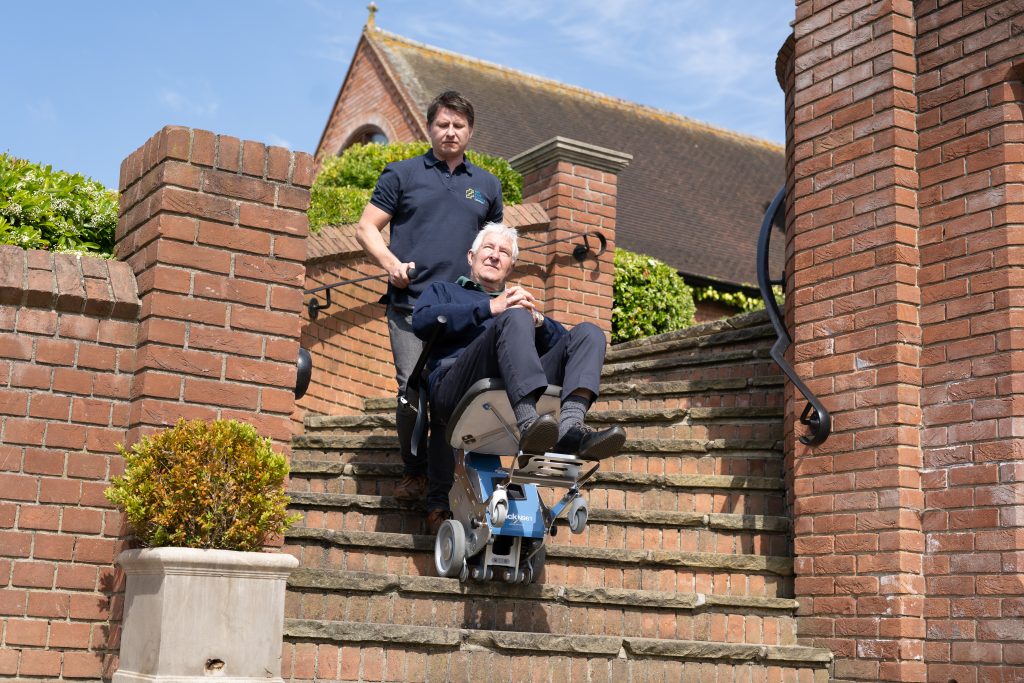
A Powered Evacuation Chair is a battery-powered stair climbing device designed to safely transport individuals with reduced mobility during an emergency evacuation. Unlike manual evacuation chairs, powered models use electric motors to control movement on stairs, reducing operator effort while maintaining stability throughout the evacuation.
The technology has developed considerably over the past decade. Modern Powered Evacuation Chairs are capable of negotiating a wide variety of staircases while maintaining a smooth and controlled descent. Many systems can also ascend stairs, providing valuable flexibility where evacuation routes or access requirements demand upward travel.
Powered stair climbing technology enables operators to remain in control throughout the evacuation rather than relying primarily on gravity. This improves confidence, reduces fatigue and creates a safer experience for both the passenger and the operator.
For many organisations, this represents a significant step forward in inclusive emergency planning.
Why Emergency Evacuation Has Changed
Historically, evacuation planning often focused on the majority of building occupants, with limited consideration given to people who could not independently use stairs. In many buildings, evacuation chairs were introduced as a basic compliance measure. While these manual chairs remain suitable in some situations, they rely heavily on operator strength, confidence and regular practice.
Today’s expectations are different.
Building owners are expected to consider how everyone can be evacuated safely, regardless of age, disability or temporary mobility impairment. The increasing adoption of Personal Emergency Evacuation Plans (PEEPs), Generic Emergency Evacuation Plans (GEEPs) and Residential Personal Emergency Evacuation Plans (RPEEPs) reflects this more inclusive approach.
Modern workplaces also have an ageing workforce. Many visitors have temporary injuries, medical conditions or mobility limitations that may not be immediately visible. Schools increasingly support pupils with complex physical needs. Universities welcome thousands of students with diverse access requirements. Hospitals and care homes routinely care for people who cannot self-evacuate.
In each of these environments, Powered Evacuation Chairs provide an effective solution that combines accessibility with operator safety.
How Powered Evacuation Chairs Work
Powered Evacuation Chairs use sophisticated electric drive systems to control movement on staircases. Rather than relying solely on gravity and friction, the powered mechanism carefully regulates speed and stability throughout the evacuation.
The operator remains fully in control, with intuitive controls allowing smooth progress on different stair gradients. The electric drive assists the operator by taking much of the physical strain out of the process, making evacuation safer and significantly reducing fatigue.
Modern Powered Evacuation Chairs are designed to work on a wide variety of stair configurations commonly found in schools, offices, healthcare environments and residential buildings. They are compact enough to be stored close to evacuation routes while remaining quick to deploy when required.
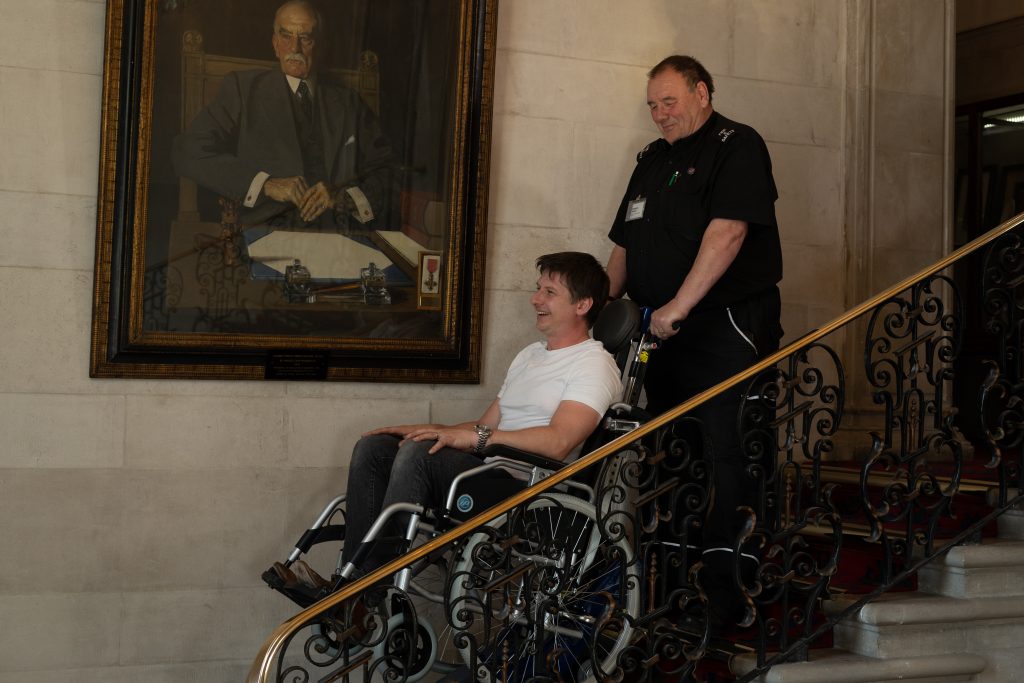
Many powered systems are also designed to minimise transfers. Non-transfer solutions allow wheelchair users to remain seated in their own wheelchair throughout the evacuation process where appropriate, preserving dignity while reducing manual handling risks.
The Difference Between Powered and Standard Evacuation Chairs
Although both types of equipment are designed to assist during emergency evacuation, the experience for operators and passengers can be very different.
A standard evacuation chair generally relies on gravity to descend stairs. Operators must carefully balance and control the chair while managing the passenger’s weight throughout the descent. On longer staircases or during repeated evacuations, this can become physically demanding.
Powered Evacuation Chairs provide motorised assistance, allowing the chair to maintain controlled movement without relying solely on operator strength. This significantly reduces manual handling demands and allows a broader range of staff to operate the equipment confidently following appropriate training.
The result is often a smoother, more dignified experience for the passenger and a safer working environment for staff responsible for emergency evacuation.
As organisations continue to prioritise staff wellbeing alongside inclusive access, many are recognising the advantages of investing in powered solutions.
The Benefits of Powered Evacuation Chairs
One of the greatest advantages of Powered Evacuation Chairs is the confidence they provide. Staff who may feel apprehensive about operating a manual evacuation chair often report feeling far more comfortable using powered equipment after receiving professional training.
Reduced physical effort means operators are less likely to become fatigued during lengthy evacuations. This is particularly valuable in taller buildings where multiple stair flights must be negotiated.
Passengers also benefit from smoother movement, greater stability and increased comfort. For individuals who may already be anxious during an emergency, this can make a significant difference to their overall experience.
Powered technology also supports organisations in meeting wider accessibility objectives. Rather than viewing evacuation as an afterthought, it becomes an integrated part of an inclusive building strategy.
Many organisations also find that powered solutions contribute positively to staff recruitment, visitor confidence and corporate social responsibility by demonstrating a genuine commitment to accessibility.
Why Operator Safety Matters
While much attention rightly focuses on the person being evacuated, operator safety is equally important.
Manual evacuation can involve significant physical demands, particularly when descending multiple flights of stairs or evacuating heavier occupants. Poor technique, inadequate training or unsuitable equipment can increase the risk of musculoskeletal injuries for staff.
Powered Evacuation Chairs substantially reduce these physical demands by allowing the motor to perform much of the work.
This not only reduces injury risk but also increases confidence among staff who may otherwise hesitate during an emergency.
As health and safety continues to evolve, organisations are recognising that protecting operators is every bit as important as protecting passengers.
The Role of UK Legislation
The growing interest in Powered Evacuation Chairs is closely linked to changes in UK fire safety legislation and increasing expectations around inclusive emergency planning.
Legislation such as the Regulatory Reform (Fire Safety) Order 2005 places clear responsibilities on those responsible for managing buildings to ensure occupants can evacuate safely. The Equality Act 2010 reinforces the need to make reasonable adjustments for disabled people, while more recent developments following the Grenfell Tower Inquiry have increased scrutiny of evacuation planning, particularly within higher-risk residential buildings.
Although legislation does not prescribe a specific type of evacuation chair, it requires organisations to assess risk, provide appropriate equipment where necessary and ensure staff receive suitable training.
Powered Evacuation Chairs frequently represent the most practical solution where manual handling risks, complex staircases or diverse building users make traditional equipment less suitable.
They are therefore becoming an increasingly common recommendation during professional evacuation assessments.
Part 2
Powered Evacuation Chairs and Emergency Evacuation Planning
An evacuation chair is only one part of an effective emergency strategy. Even the most advanced Powered Evacuation Chair will not deliver its full benefits unless it is supported by well-developed evacuation plans, competent staff and regular training.
Modern emergency planning is no longer simply about complying with legislation. It is about understanding who uses your building, identifying potential barriers to evacuation and ensuring that everyone can leave the building safely and with dignity.
This is where evacuation planning has evolved significantly in recent years. Rather than relying on generic procedures, organisations are now expected to consider the specific needs of different building users and ensure suitable arrangements are in place before an emergency occurs.
Powered Evacuation Chairs fit naturally into this more proactive approach because they provide a practical solution that supports both accessibility and operator safety.
Personal Emergency Evacuation Plans (PEEPs)
A Personal Emergency Evacuation Plan, commonly known as a PEEP, is an individual plan developed for someone who may require assistance during an emergency evacuation.
This may include employees, students, visitors or contractors who cannot safely use stairs without assistance. The plan identifies how the individual will leave the building, who will assist them, what equipment is required and what training staff should receive.
A well-designed PEEP removes uncertainty during an emergency. Everyone involved understands their responsibilities, the equipment is readily available and the evacuation process has already been considered before an alarm sounds.
Powered Evacuation Chairs are increasingly becoming the preferred equipment within many PEEPs because they reduce the physical effort required by staff while improving comfort for the individual being evacuated.
For organisations employing people with permanent disabilities or regularly welcoming visitors with mobility impairments, investing in powered equipment can significantly improve confidence in the evacuation process.
Residential Personal Emergency Evacuation Plans (RPEEPs)
Following the Grenfell Tower Inquiry, there has been a renewed focus on evacuation planning within residential buildings.
Residential Personal Emergency Evacuation Plans, or RPEEPs, have become an important part of discussions surrounding high-rise residential safety. These plans are designed to ensure that residents who may struggle to self-evacuate are properly considered within a building’s fire safety arrangements.
Many modern apartment developments, supported living schemes and retirement housing now include evacuation planning as part of their wider fire risk management strategy.
Powered Evacuation Chairs provide building managers with greater flexibility when supporting residents with reduced mobility. Rather than relying entirely on manual handling, powered technology allows trained staff to evacuate residents more safely while reducing physical strain.
As residential fire safety continues to evolve, many building owners are reviewing their evacuation equipment alongside updated fire risk assessments.
Generic Emergency Evacuation Plans (GEEPs)
Not everyone who requires assistance can be identified in advance.
Visitors, customers, parents attending schools, conference delegates or patients arriving for appointments may all require support during an emergency.
Generic Emergency Evacuation Plans provide organisations with procedures for assisting individuals whose needs are unknown before they enter the building.
For example, a hotel cannot prepare an individual PEEP for every guest who arrives. Instead, staff require equipment and procedures that allow them to respond confidently if assistance becomes necessary.
Powered Evacuation Chairs are particularly valuable within GEEPs because they are straightforward to operate following appropriate training and suitable for a wide range of users.
Building Emergency Evacuation Plans (BEEPs)
While PEEPs focus on individuals, Building Emergency Evacuation Plans take a broader view of the entire premises.
A BEEP considers evacuation routes, refuge areas, communication systems, staff responsibilities, equipment locations and coordination with emergency services.
Powered Evacuation Chairs often become a key component of these wider building strategies, particularly where multiple staircases, varying floor levels or high occupancy numbers create additional challenges.
When evacuation equipment forms part of an overall building strategy rather than existing as an isolated purchase, organisations achieve much higher levels of preparedness.
Why Schools Are Investing in Powered Evacuation Chairs
Schools have changed dramatically over the past two decades.
Inclusive education means more pupils with complex physical disabilities are attending mainstream schools. Multi-storey buildings have become increasingly common and many schools occupy older premises where installing lifts is difficult or impossible.
Emergency evacuation planning therefore requires careful consideration.
A Powered Evacuation Chair provides schools with a practical way of supporting pupils, staff and visitors who cannot independently use stairs.
For pupils with physical disabilities, remaining calm during an evacuation is essential. Smooth, controlled movement provided by powered technology helps reduce anxiety while maintaining dignity throughout the evacuation.
Teaching assistants, support staff and site teams also benefit from the reduced physical effort required to operate powered equipment.
Many schools choose to combine Powered Evacuation Chairs with regular evacuation training so that staff remain confident and competent throughout the academic year.
The Evacuation Company works closely with schools across England to assess buildings, recommend appropriate equipment and provide practical training tailored to each school’s layout and pupil population.
Universities and Higher Education
University campuses often present unique evacuation challenges.
Buildings may include lecture theatres, laboratories, libraries, student accommodation, sports facilities and historic listed buildings, each with different access requirements.
Students with disabilities expect inclusive learning environments, but accessibility must extend beyond everyday use of the building.
Emergency evacuation planning should ensure students, staff and visitors can all leave safely regardless of where they are located on campus.
Powered Evacuation Chairs provide universities with flexible evacuation solutions that can be deployed across multiple buildings while reducing manual handling risks for security teams, facilities managers and campus support staff.
Many universities also appreciate the ability to standardise training across different departments using the same powered equipment.
Hospitals and Healthcare Settings
Healthcare environments present some of the most complex evacuation scenarios.
Patients may be recovering from surgery, receiving treatment or experiencing temporary mobility limitations. Others may rely on wheelchairs or specialist seating.
Hospitals must balance patient safety with the practical realities of moving people quickly during an emergency.
Powered Evacuation Chairs offer healthcare providers greater control during stair evacuation while helping reduce physical demands on nursing staff and porters.
Community hospitals, outpatient centres and GP surgeries also benefit from powered solutions where passenger lifts cannot be relied upon during fire evacuations.
The reduced manual handling associated with powered stair climbing technology aligns well with wider NHS objectives surrounding staff wellbeing and injury prevention.
Care Homes and Assisted Living
Residents within care homes often have a combination of mobility, cognitive and medical needs.
Emergency evacuation therefore requires equipment that is reliable, easy to operate and capable of providing a calm experience during what may already be a distressing situation.
Powered Evacuation Chairs enable trained carers to assist residents safely while reducing the risk of injury to both parties.
Because many residents may require evacuation during a single incident, reducing operator fatigue becomes particularly important.
Many care home providers are now reviewing powered evacuation equipment as part of broader fire safety improvements, recognising that technology can significantly enhance both preparedness and resident dignity.
Hotels and Hospitality
Hotels welcome guests of every age and ability.
Reception teams rarely know who may require evacuation assistance until they arrive, making Generic Emergency Evacuation Plans particularly important.
Luxury hotels, conference venues and city-centre accommodation often occupy multi-storey buildings where lifts cannot be used during fire emergencies.
Powered Evacuation Chairs allow staff to assist guests confidently while maintaining the high standards of customer care expected within the hospitality industry.
Many hotel operators also view investment in accessible evacuation as an extension of their commitment to inclusive tourism.
Guests increasingly expect accessibility to include emergency planning, not simply step-free entrances and accessible bedrooms.
Commercial Offices
Modern office buildings continue to evolve, with organisations encouraging flexible working, collaborative spaces and hybrid occupancy.
This means the number and location of occupants can vary considerably from one day to the next.
Facilities managers therefore require evacuation procedures that remain effective regardless of changing occupancy levels.
Powered Evacuation Chairs support this flexibility by providing equipment that trained staff can deploy quickly whenever required.
Many commercial landlords also recognise that demonstrating strong accessibility credentials makes buildings more attractive to prospective tenants.
Emergency evacuation planning is increasingly viewed as part of a building’s overall quality rather than simply a compliance exercise.
Local Authorities and Public Buildings
Council offices, libraries, museums, leisure centres and civic buildings serve highly diverse communities.
Visitors may include older people, families with young children, wheelchair users and individuals with temporary injuries.
Public sector organisations have a responsibility to provide services that are accessible to everyone, and this extends to emergency evacuation.
Powered Evacuation Chairs help local authorities demonstrate a practical commitment to inclusion while supporting staff responsible for emergency response.
Whether installed in a town hall, public library or leisure centre, powered evacuation equipment provides reassurance that all visitors have been considered within emergency planning.
Why Professional Assessments Matter
No two buildings are identical.
Stair widths, landings, floor layouts, occupancy profiles and operational procedures all influence the most appropriate evacuation solution.
A professional assessment ensures equipment is selected based on real operational requirements rather than assumptions.
At The Evacuation Company, every assessment considers not only the building itself but also the people who use it, the likely evacuation scenarios and the practicalities of ongoing training and equipment management.
This approach enables organisations to develop evacuation strategies that are proportionate, compliant and genuinely effective rather than simply meeting minimum requirements.

Part 3
Powered Evacuation Chairs in Heritage and Listed Buildings
Historic buildings are among the most challenging environments for accessibility and emergency evacuation. Many were constructed centuries before modern accessibility standards existed, with narrow staircases, uneven landings and architectural features that cannot be altered without affecting the character of the building.
Installing permanent lifts or platform lifts is often impractical, prohibitively expensive or restricted by planning requirements. Even where alterations are possible, they may not be appropriate for buildings with significant historical or architectural value.
Powered Evacuation Chairs provide an effective solution that works with the building rather than against it. Because they require no permanent structural alterations, they allow organisations to improve emergency evacuation while preserving the building’s heritage.
Museums, stately homes, cathedrals, National Trust properties, theatres and listed commercial buildings increasingly rely on powered evacuation technology to support visitors, staff and volunteers.
The Evacuation Company has worked with numerous heritage organisations across England, demonstrating how modern evacuation technology can complement historic architecture without compromising its integrity.
Supporting Accessibility Beyond Compliance
Accessibility should never stop at the entrance to a building.
Many organisations have invested significantly in ramps, accessible toilets, hearing loops and inclusive design. However, emergency evacuation is sometimes overlooked despite being an equally important part of the visitor experience.
A wheelchair user who can enter a building independently should also have confidence that they can leave safely if an emergency occurs.
Powered Evacuation Chairs help bridge this gap by providing a practical evacuation solution that complements wider accessibility improvements.
Increasingly, organisations are recognising that true inclusion means considering the complete customer journey, including emergency situations.
Protecting Staff Through Better Manual Handling
Every evacuation involves two groups of people.
The first is the individual being evacuated.
The second is the person responsible for carrying out the evacuation.
Historically, the physical demands placed on operators have often been underestimated. Descending several flights of stairs while controlling the weight of another person requires concentration, strength and confidence.
Repeated evacuations during training exercises or real emergencies can increase fatigue and elevate the risk of musculoskeletal injuries.
Powered Evacuation Chairs significantly reduce these demands.
The powered drive system assists with movement on the staircase, allowing the operator to focus on maintaining control and communicating with the passenger rather than supporting the full load.
For organisations with health and safety responsibilities towards their employees, reducing manual handling risks is a major advantage.
Many employers view investment in powered equipment not simply as an accessibility improvement but also as a proactive measure to protect staff wellbeing.
Building Confidence Through Training
Even the best evacuation equipment is only as effective as the people using it.
Training is therefore one of the most important elements of any evacuation strategy.
Staff should understand where equipment is stored, how it operates, when it should be used and how to communicate effectively with the person being evacuated.
Confidence develops through practical experience.
Hands-on training allows staff to become familiar with the equipment in realistic scenarios, reducing uncertainty during genuine emergencies.
At The Evacuation Company, training focuses on practical competence rather than simply completing a course.
Participants learn how to prepare the equipment, assess staircases, communicate with passengers, negotiate different building layouts and respond confidently under pressure.
Refresher training also plays an important role.
Buildings change, staff move on and emergency procedures evolve. Regular training helps ensure knowledge remains current and consistent across the organisation.
Developing a Culture of Preparedness
The strongest evacuation strategies are built into the culture of an organisation rather than existing solely within a written document.
Staff should feel confident discussing evacuation procedures, identifying potential improvements and reporting concerns before they become problems.
Regular drills help reinforce this culture by allowing procedures to be tested under controlled conditions.
Powered Evacuation Chairs often encourage greater participation during drills because operators feel more confident using powered equipment than relying entirely on manual handling techniques.
This increased confidence contributes to more effective emergency preparedness across the organisation.
Servicing and Ongoing Maintenance
Like any safety-critical equipment, Powered Evacuation Chairs require regular inspection and maintenance.
Routine servicing helps ensure the equipment remains fully operational and ready for immediate deployment should an emergency arise.
Maintenance typically includes inspection of the powered drive system, battery performance, safety restraints, structural components and operational controls.
Organisations should also carry out regular visual inspections to identify any signs of wear, accidental damage or missing components between formal service visits.
Keeping maintenance records demonstrates good governance and supports wider health and safety management systems.
The Evacuation Company provides servicing programmes that help organisations maintain compliance while maximising the lifespan and reliability of their equipment.
Battery Technology and Reliability
Modern Powered Evacuation Chairs use highly reliable rechargeable battery systems designed specifically for demanding safety applications.
Battery technology has advanced significantly in recent years, providing longer operating times, improved charging efficiency and enhanced reliability.
Routine charging schedules and regular maintenance ensure equipment remains ready for use whenever required.
Many organisations include battery checks within their routine fire safety inspections to provide additional reassurance.
Reliable battery management forms an important part of ensuring evacuation equipment performs exactly as expected during an emergency.
Hiring or Purchasing a Powered Evacuation Chair
Every organisation has different operational requirements.
Some buildings require permanent evacuation equipment that is available every day.
Others may only need additional capacity during planned events, conferences, building works or temporary changes in occupancy.
For organisations with ongoing requirements, purchasing a Powered Evacuation Chair often represents the most cost-effective long-term investment.
Ownership allows equipment to become fully integrated into emergency planning, staff training and routine maintenance programmes.
Hiring offers greater flexibility.
Temporary hire is particularly useful for events, refurbishment projects, lift maintenance periods or short-term accessibility requirements.
Many organisations also choose to hire equipment before making a purchasing decision, allowing staff to gain practical experience before selecting the most appropriate solution.
The Evacuation Company supports both approaches, helping organisations identify the option that best matches their operational needs.
Choosing the Right Powered Evacuation Chair
Selecting evacuation equipment should never be based solely on price.
The most suitable solution depends on a wide range of factors, including building layout, staircase design, expected passenger profile, frequency of use and available staffing.
Questions to consider include:
Can the equipment accommodate the range of people who may require evacuation?
Is it suitable for the staircases within the building?
How much operator training is required?
Will the equipment reduce manual handling risks?
How quickly can it be deployed during an emergency?
What servicing support is available?
Professional assessments help answer these questions objectively and ensure organisations invest in equipment that genuinely meets their operational requirements.
The Importance of Professional Demonstrations
Reading about Powered Evacuation Chairs is valuable.
Experiencing them in operation is even more informative.
Live demonstrations allow organisations to see how the equipment performs within their own building using their own staircases.
Staff can ask questions, operate the equipment themselves and gain a much clearer understanding of how powered technology improves evacuation.
Demonstrations often reveal practical considerations that would be difficult to identify through product brochures alone.
This hands-on approach gives decision-makers greater confidence when selecting equipment.
Future-Proofing Your Evacuation Strategy
Buildings evolve over time.
Occupancy changes.
Legislation develops.
Technology continues to improve.
An evacuation strategy should therefore be capable of adapting alongside these changes.
Powered Evacuation Chairs provide organisations with a flexible solution that supports future accessibility objectives while accommodating changing operational requirements.
Many organisations now view powered evacuation technology as part of their long-term investment in building resilience rather than simply a response to current compliance requirements.
By planning ahead, organisations can reduce future costs, improve staff confidence and provide greater reassurance to everyone who uses their buildings.
Why Choosing the Right Partner Matters
Selecting the right equipment is only part of the process.
Successful evacuation planning depends on expert advice, thorough assessments, high-quality training and reliable ongoing support.
At The Evacuation Company, we work closely with organisations across England to understand their buildings, identify potential risks and recommend practical solutions tailored to their specific requirements.
Our approach combines real-world experience with an in-depth understanding of accessibility, manual handling and emergency evacuation planning.
Rather than recommending a one-size-fits-all solution, we help organisations develop evacuation strategies that are practical, proportionate and designed to support both the people being evacuated and the staff responsible for assisting them.
This collaborative approach has helped schools, universities, hospitals, care homes, commercial property owners, local authorities and heritage organisations improve their emergency preparedness while creating more inclusive environments for everyone who uses their buildings.
Part 4
The Future of Powered Evacuation Chairs
Emergency evacuation is changing.
For many years, organisations viewed evacuation chairs as equipment that sat on a wall and was only used if the worst happened. Today, there is a growing recognition that evacuation planning should be an active part of an organisation’s accessibility strategy rather than simply a compliance exercise.
Technology is driving this change.
Powered stair climbing systems are becoming more sophisticated, battery technology is improving and equipment is becoming more intuitive to operate. At the same time, expectations surrounding inclusive design continue to rise.
People rightly expect that accessibility should not stop when the fire alarm sounds.
Whether someone is a member of staff, a pupil, a patient, a visitor or a customer, they should have confidence that appropriate arrangements are in place to help them leave the building safely if an emergency occurs.
Powered Evacuation Chairs are helping organisations meet these expectations by combining innovative engineering with practical evacuation planning.
Creating Accessible Buildings That Are Prepared for Emergencies
Many organisations invest heavily in improving day-to-day accessibility.
Automatic doors.
Accessible toilets.
Changing Places facilities.
Hearing enhancement systems.
Step-free entrances.
These improvements are essential, but they represent only part of an inclusive environment.
Emergency evacuation should be considered from the very beginning of any accessibility strategy.
When accessibility and evacuation planning work together, organisations create buildings that are safer, more welcoming and better prepared for every eventuality.
This integrated approach also demonstrates a genuine commitment to inclusion rather than treating accessibility as a box-ticking exercise.
Why Powered Stair Climbing Technology Continues to Evolve
Powered stair climbing technology has advanced rapidly over recent years.
Earlier systems focused primarily on helping operators descend staircases safely.
Modern powered systems now offer greater stability, improved battery performance, smoother movement and enhanced operator control.
Manufacturers continue to invest in innovations that improve passenger comfort while reducing manual handling demands on operators.
These developments are particularly valuable in buildings with multiple staircases, complex layouts or high occupancy levels.
As technology continues to evolve, Powered Evacuation Chairs are likely to become an increasingly common feature within emergency evacuation strategies across England.
Why Organisations Are Choosing The Evacuation Company
Every building presents different challenges.
A listed building in London requires a different approach to a modern university campus.
A care home has different operational requirements to a hotel.
A primary school faces different evacuation considerations to an NHS hospital.
This is why every recommendation made by The Evacuation Company begins with understanding the building and the people who use it.
Our experienced consultants carry out detailed assessments that consider stair design, building layout, occupancy, manual handling risks and emergency procedures before recommending the most appropriate solution.
We believe equipment should fit the building, not the other way around.
Alongside equipment supply, we provide practical demonstrations, operator training, servicing, maintenance, equipment hire and ongoing support to help organisations maintain confidence long after installation.
Working exclusively across England, we have supported organisations in education, healthcare, local government, commercial property, hospitality and the heritage sector.
Our goal is simple.
To help every organisation create safer, more inclusive evacuation procedures that protect both passengers and operators.
Frequently Asked Questions
What is a Powered Evacuation Chair?
A Powered Evacuation Chair is a motorised stair climbing device designed to help evacuate people with reduced mobility safely during an emergency while reducing the physical effort required by operators.
Are Powered Evacuation Chairs better than manual evacuation chairs?
For many buildings, yes.
Powered systems reduce manual handling, improve operator confidence and provide smoother, more controlled movement on staircases.
Can one person operate a Powered Evacuation Chair?
Many Powered Evacuation Chairs are designed to be operated safely by a single trained person. The most appropriate staffing arrangements should always be determined through a professional risk assessment.
Are Powered Evacuation Chairs suitable for schools?
Yes.
They are widely used in mainstream schools, special schools, colleges and universities to support inclusive emergency evacuation planning.
Can they be used in care homes?
Yes.
Many care homes use Powered Evacuation Chairs because they reduce physical demands on carers while improving comfort for residents.
Are Powered Evacuation Chairs suitable for hospitals?
Yes.
Hospitals, community healthcare facilities and outpatient clinics frequently use powered evacuation equipment as part of wider emergency planning.
Can Powered Evacuation Chairs be used in listed buildings?
Yes.
Because they require no permanent alterations to the building, they are often an excellent solution for heritage properties and listed buildings.
Do they require regular servicing?
Yes.
Like all safety-critical equipment, Powered Evacuation Chairs should be serviced regularly to ensure they remain fully operational.
How often should staff receive training?
Training frequency depends on organisational policy and risk assessment. Many organisations schedule refresher training annually or whenever significant staffing changes occur.
Can Powered Evacuation Chairs be hired?
Yes.
The Evacuation Company provides short-term and long-term hire solutions for planned events, temporary requirements and building projects.
Can they replace passenger lifts during a fire?
No.
Passenger lifts should not normally be used during a fire unless they are specifically designed and designated as evacuation lifts.
Powered Evacuation Chairs provide an alternative means of evacuation using staircases.
Are Powered Evacuation Chairs heavy?
Although powered equipment contains motors and batteries, modern designs are engineered to remain practical for deployment while significantly reducing physical effort during stair travel.
Can they be stored close to escape routes?
Yes.
Many organisations position Powered Evacuation Chairs adjacent to protected staircases so they are immediately available during an emergency.
Who should carry out an evacuation assessment?
Assessments should be undertaken by competent professionals with experience in accessibility, fire safety, manual handling and emergency evacuation planning.
What buildings benefit most from Powered Evacuation Chairs?
Almost any multi-storey building can benefit, including schools, universities, hospitals, care homes, hotels, offices, museums, theatres, public buildings and residential developments.
Are Powered Evacuation Chairs suitable for temporary mobility impairments?
Yes.
They can support people recovering from surgery, sports injuries or other temporary conditions that affect their ability to use stairs.
Do Powered Evacuation Chairs support inclusive design?
Absolutely.
They help ensure emergency evacuation is considered alongside everyday accessibility, creating more inclusive buildings.
How long do the batteries last?
Battery performance varies between models and usage patterns. Regular charging and servicing help ensure equipment is always ready for deployment.
Why should organisations consider powered technology rather than manual alternatives?
Powered systems reduce operator fatigue, improve control, increase confidence and provide a smoother experience for passengers, particularly in larger or more complex buildings.
Where can I arrange a demonstration?
The Evacuation Company provides demonstrations, assessments and advice throughout England, allowing organisations to evaluate Powered Evacuation Chairs within their own buildings.
Final Thoughts
Emergency evacuation is no longer simply about moving people out of a building.
It is about ensuring every person has the same opportunity to reach safety, regardless of their mobility.
Powered Evacuation Chairs represent a significant advancement in emergency evacuation technology. They provide greater control, reduce manual handling, improve passenger comfort and help organisations develop more inclusive evacuation procedures.
Combined with professional assessments, effective training and regular servicing, they enable responsible persons to move beyond minimum compliance and create evacuation strategies that genuinely work when they are needed most.
Whether you manage a school, university, hospital, care home, hotel, office, heritage property or public building, investing in the right evacuation solution today can make a profound difference tomorrow.
Speak to The Evacuation Company
If you are reviewing your building’s emergency evacuation arrangements, planning a refurbishment or developing new PEEPs, RPEEPs or GEEPs, our team is here to help.
We offer free initial consultations, on-site building assessments, live product demonstrations, equipment hire, servicing and accredited training throughout England.
Our experienced consultants will help you identify the most appropriate Powered Evacuation Chair solution for your building, ensuring your evacuation strategy is practical, compliant and centred on the people who rely on it.
Contact The Evacuation Company today to arrange a demonstration and discover how Powered Evacuation Chairs can help create a safer, more accessible future for everyone.
The Regulatory Reform (Fire Safety) Order
2010 guidance Health and Safety Executive (HSE)
National Fire Chiefs Council (NFCC)
Estimated reading time: 27 minutes