

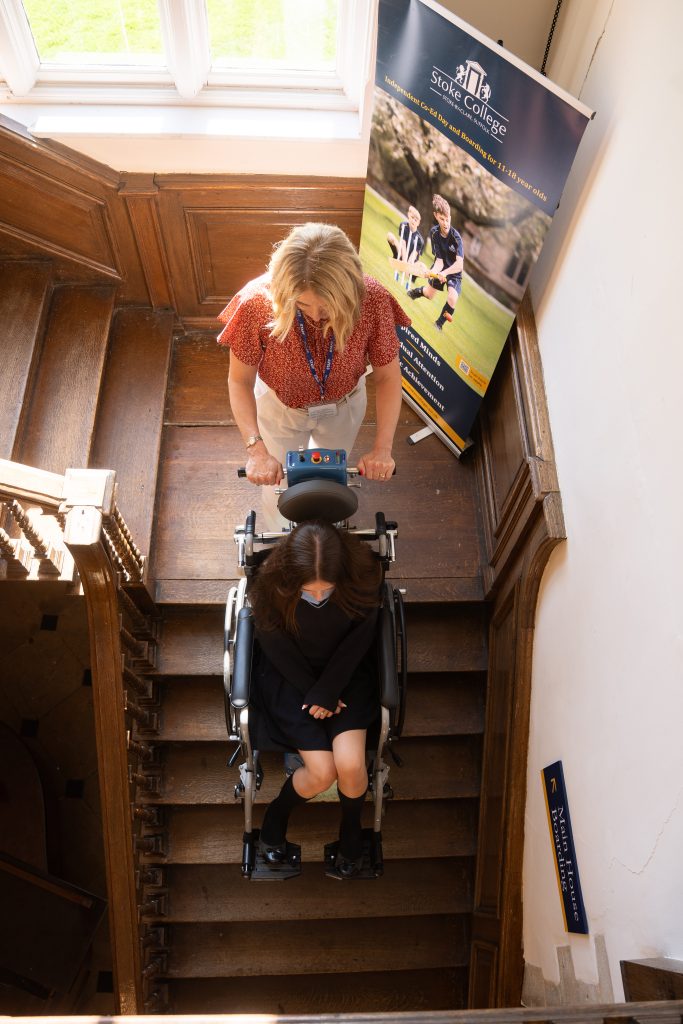
Emergency evacuation planning has undergone one of the biggest transformations in recent years. Organisations are no longer expected to think only about how quickly people can leave a building. They are expected to consider how everyone can leave safely, including those who cannot use stairs independently.
For schools, universities, hospitals, offices, hotels, care homes and public buildings, this change has brought Personal Emergency Evacuation Plans, commonly known as PEEPs, into much sharper focus.
A PEEP is more than a document. It is a practical plan that gives people confidence that they have been considered before an emergency occurs. When combined with the right equipment, including a Powered Evacuation Chair, it becomes an essential part of creating a genuinely inclusive building.
At The Evacuation Company, we believe that effective evacuation planning should never be about doing the minimum required. It should provide reassurance to everyone who enters your building while protecting the staff responsible for assisting them.
What Is a Personal Emergency Evacuation Plan?
A Personal Emergency Evacuation Plan is an individual plan created for someone who may require assistance to evacuate during an emergency.
The plan explains how that person will leave the building safely if lifts cannot be used. It identifies the equipment required, who will provide assistance, where refuge points are located and any specific considerations that should be taken into account.
A PEEP should be developed with the individual wherever possible. Every person’s mobility, confidence, communication needs and medical circumstances are different, so no two plans are exactly the same.
When prepared correctly, a PEEP removes uncertainty. Staff understand their responsibilities, the individual understands the procedure and everyone knows what will happen should an emergency arise.
Why PEEPs Have Become More Important
The expectations placed on responsible persons have changed considerably over the past decade.
Buildings have become more inclusive, welcoming people with a wide range of physical abilities. At the same time, fire safety legislation and guidance have evolved, placing greater emphasis on planning for everyone rather than assuming occupants can evacuate independently.
Following the Grenfell Tower Inquiry, emergency evacuation planning received renewed attention across both residential and commercial sectors. While different types of buildings have different legal responsibilities, the underlying principle remains the same.
People should not be placed at unnecessary risk because they cannot use stairs independently.
This is why many organisations are reviewing existing evacuation procedures and asking whether their current arrangements remain appropriate.
Why Equipment Matters
A PEEP is only effective if it can be put into practice.
Simply identifying that someone requires assistance is not enough. Organisations must also consider how that assistance will be provided.
This is where Powered Evacuation Chairs play such an important role.
Traditional manual evacuation chairs rely heavily on operator strength and technique. Although they remain suitable in many situations, they can be physically demanding, particularly in taller buildings or where repeated evacuations may be required.
Powered Evacuation Chairs use motorised stair climbing technology to provide controlled movement on stairs while significantly reducing the physical effort required from operators.
This makes evacuation more comfortable for the passenger and more manageable for the person providing assistance.
Supporting Dignity During an Emergency
Emergencies are stressful for everyone.
For someone who relies on assistance to leave a building, that stress can be even greater.
Being transferred between chairs or feeling that evacuation depends entirely on another person’s physical strength can increase anxiety during what is already a difficult situation.
Powered Evacuation Chairs help create a calmer experience.
Their controlled movement reduces sudden changes in speed, while the stability of modern powered systems often provides greater reassurance for passengers.
When combined with well-trained staff and a carefully prepared PEEP, this creates a far more dignified evacuation process.
Protecting the People Carrying Out the Evacuation
Every evacuation involves at least two people.
The person being evacuated.
The person providing assistance.
Organisations have a duty to consider the safety of both.
Manual handling injuries remain one of the leading causes of workplace absence across many sectors. Asking staff to manually control significant weight down multiple flights of stairs inevitably introduces risk.
Powered Evacuation Chairs reduce these manual handling demands.
Rather than relying solely on physical effort, operators are supported by powered stair climbing technology that helps maintain controlled movement throughout the evacuation.
For many organisations, this is one of the strongest reasons for investing in powered equipment.
PEEPs in Schools
Schools continue to become more inclusive.
Pupils with physical disabilities increasingly learn alongside their peers in mainstream education, while special schools support children with a wide range of complex mobility needs.
Teachers and teaching assistants must therefore be prepared to respond confidently if an emergency occurs.
A Powered Evacuation Chair can form a key part of a pupil’s PEEP by providing a safe and reliable method of evacuation that can be practised during regular drills.
Schools also benefit from reducing the physical demands placed on staff, many of whom may need to assist several pupils during an emergency.
Universities and Colleges
Higher education campuses often consist of multiple buildings with varying ages, layouts and accessibility challenges.
Students may move between lecture theatres, laboratories, libraries and accommodation throughout the day.
PEEPs help ensure appropriate arrangements exist regardless of where a student happens to be when an alarm sounds.
Powered Evacuation Chairs provide universities with flexible equipment that can support these diverse environments while allowing facilities teams to standardise training across campus.
Healthcare Settings
Hospitals, community healthcare centres and rehabilitation facilities regularly care for people whose mobility may change from day to day.
Patients recovering from surgery, receiving treatment or living with long-term conditions may all require individual evacuation planning.
Powered Evacuation Chairs help healthcare providers create PEEPs that balance patient safety with operator wellbeing.
The reduced manual handling involved also supports wider workplace health and safety objectives.
Residential Buildings and RPEEPs
Residential Personal Emergency Evacuation Plans, known as RPEEPs, have become an increasingly important topic following the Grenfell Tower Inquiry.
Although legal duties vary depending on the type of building, many housing providers are reviewing how residents with mobility impairments would be supported during an emergency.
Powered Evacuation Chairs can provide a practical solution where trained staff are available to assist residents safely using protected staircases.
As fire safety continues to evolve, organisations managing residential buildings are increasingly seeking professional advice to ensure evacuation arrangements remain appropriate.
Visitors and Generic Emergency Evacuation Plans
Not every building user can have an individual PEEP.
Hotels, museums, conference centres, leisure facilities and council buildings welcome hundreds or even thousands of visitors whose mobility needs are unknown before they arrive.
Generic Emergency Evacuation Plans, or GEEPs, provide procedures for assisting these individuals.
Powered Evacuation Chairs are particularly valuable in these environments because they offer a flexible solution suitable for a broad range of users while reducing physical demands on trained staff.
The Importance of Regular Reviews
A PEEP should never remain unchanged indefinitely.
People’s needs evolve.
Buildings change.
Staff leave and new employees join.
Equipment is updated.
Regular reviews help ensure evacuation procedures remain accurate and effective.
The Evacuation Company recommends reviewing PEEPs whenever there is a significant change in building layout, staffing or the individual’s circumstances.
Regular evacuation exercises also help identify opportunities for improvement before a real emergency occurs.
Why Professional Assessments Matter
Creating an effective PEEP requires more than completing a template.
Every building presents different challenges.
Stair widths, refuge areas, travel distances, staffing levels and evacuation equipment all influence the most appropriate approach.
A professional building assessment considers these factors alongside the needs of the individual, ensuring evacuation procedures are practical rather than theoretical.
This personalised approach provides greater confidence for building managers, staff and those who rely on the plan.
Looking Beyond Compliance
The best organisations do not create PEEPs because they have been instructed to.
They create them because they recognise that every person deserves the same opportunity to reach safety.
Powered Evacuation Chairs support this philosophy by making evacuation safer, more controlled and less physically demanding.
They help transform emergency planning from a compliance exercise into a practical demonstration of inclusion.
Conclusion
Personal Emergency Evacuation Plans have become an essential part of modern building management.
However, a written plan alone cannot move someone safely down a staircase.
Powered Evacuation Chairs provide the practical solution that enables PEEPs to work effectively, supporting both the individual being evacuated and the staff responsible for assisting them.
Whether you manage a school, university, office, care home, hospital, hotel or public building, combining well-designed PEEPs with the right Powered Evacuation Chair can significantly improve your emergency preparedness.
At The Evacuation Company, we help organisations across England develop evacuation strategies that are practical, inclusive and tailored to the unique needs of their buildings. Through professional assessments, live demonstrations, accredited training, equipment hire and ongoing servicing, we help ensure your emergency plans are ready long before they are ever needed.
Check out the below Pillar post for more information on Evacuation Chairs..
Powered Evacuation Chair for Dignified Evacuations – The Evacuation Company The Evacuation Company
Key Takeaways
- Emergency evacuation planning now emphasizes safety for all, including those needing assistance, through Personal Emergency Evacuation Plans (PEEPs).
- A PEEP outlines evacuation procedures, identifying required equipment and assistance for individuals unable to evacuate independently.
- Powered Evacuation Chairs significantly ease the evacuation process, reducing manual handling demands and supporting both passengers and staff.
- Regular reviews of PEEPs are crucial to ensure effectiveness as circumstances change and buildings evolve.
- Investing in Powered Evacuation Chair PEEP systems transforms compliance into a commitment to inclusivity and safety during emergencies.
Estimated reading time: 8 minutes
Table of contents
- What Is a Personal Emergency Evacuation Plan?
- Why PEEPs Have Become More Important
- Why Equipment Matters
- Supporting Dignity During an Emergency
- Protecting the People Carrying Out the Evacuation
- PEEPs in Schools
- Universities and Colleges
- Healthcare Settings
- Residential Buildings and RPEEPs
- Visitors and Generic Emergency Evacuation Plans
- The Importance of Regular Reviews
- Why Professional Assessments Matter
- Looking Beyond Compliance
- Conclusion