

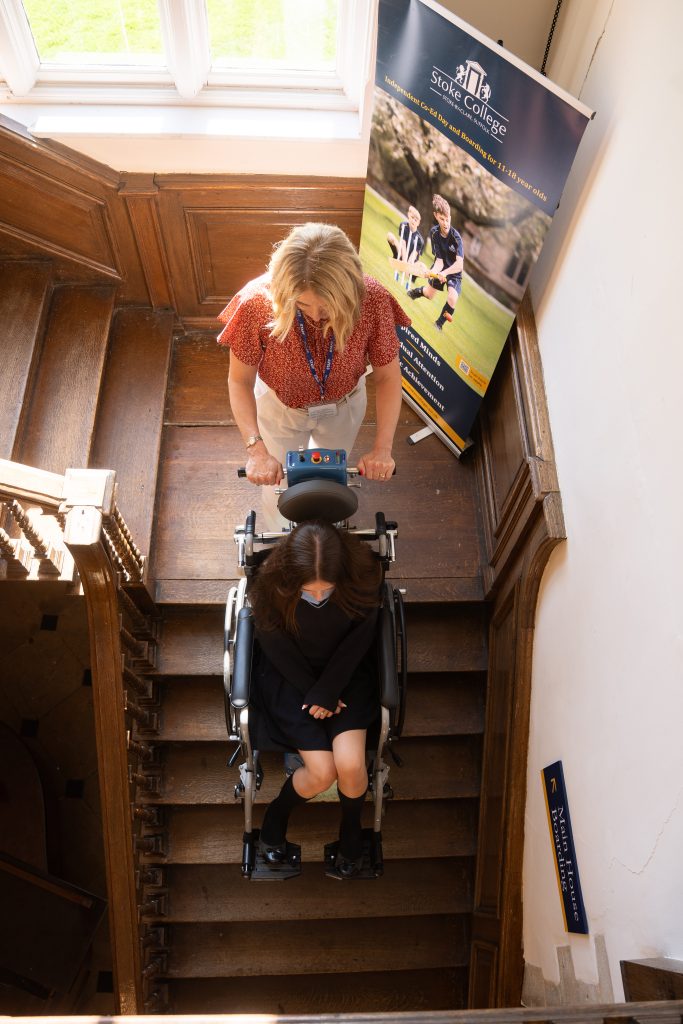
Powered Evacuation Chairs in Limehouse, London: Safer Emergency Evacuation for Local Buildings
Limehouse is one of East London’s most distinctive areas, combining riverside apartments, historic buildings, commercial premises, community facilities, schools, healthcare settings and busy transport connections. Positioned close to Canary Wharf, Wapping, Stepney, Poplar and the wider Tower Hamlets area, Limehouse has a varied building landscape that creates important responsibilities for fire safety, accessibility and emergency evacuation planning.
For organisations, landlords, managing agents and facilities teams in Limehouse, the question is simple but vital. Can every person in the building evacuate safely during an emergency?
That question becomes even more important when considering people who cannot use stairs without assistance. This may include wheelchair users, older residents, people with long-term mobility conditions, visitors with temporary injuries, pregnant people, staff recovering from surgery or anyone who may find stair evacuation difficult.
As buildings become busier and expectations around inclusive safety continue to rise, Powered Evacuation Chairs are becoming an increasingly important part of emergency evacuation planning in Limehouse and across East London. Traditional evacuation chairs remain a trusted and effective solution in many buildings, but Powered Evac Chairs and Powered Stairclimbers offer additional support where stair routes are demanding, buildings have multiple floors or manual handling risks need to be reduced.
Modern evacuation planning is also closely connected to PEEPs, RPEEPs, GEEPs and BEEPs. These evacuation acronyms help responsible persons, fire safety teams, landlords and employers create practical plans that support everyone in the building.
A PEEP is a Personal Emergency Evacuation Plan. It sets out how a specific individual will be supported during an evacuation. A RPEEP is a Residential Personal Emergency Evacuation Plan, which is especially relevant in apartment buildings and residential blocks. A GEEP is a Generic Emergency Evacuation Plan, often used for visitors or groups of people with similar needs. A BEEP is a Building Emergency Evacuation Plan, which considers the wider evacuation strategy for the whole premises.
For Limehouse buildings, these plans must be more than documents in a folder. They need to work in real situations, under pressure, with trained people and suitable equipment.
Traditional evacuation chairs have been used across London for many years. They remain an important part of many fire safety strategies because they are compact, familiar and effective when used correctly. In many cases, a traditional evacuation chair can be stored near a staircase, refuge point or evacuation route and deployed by trained staff when needed.
The strengths of traditional evacuation chairs are clear. They are generally lightweight, relatively easy to store and suitable for many buildings with straightforward staircases. They are often cost effective and well understood by facilities teams. When operators are properly trained and evacuation routes are suitable, traditional chairs can provide a reliable method of assisting a person down stairs.
For smaller offices, community facilities, clinics, schools and low-rise residential settings in Limehouse, a traditional evacuation chair may remain the right solution. It can form part of a strong evacuation strategy when supported by regular maintenance, staff training and clear emergency procedures.
However, traditional evacuation chairs also depend heavily on the strength, confidence and technique of the operator. Moving a person down stairs during an emergency can be physically demanding. This is especially true where staircases are long, narrow, busy or spread across several floors.
In a mixed area such as Limehouse, where older buildings sit alongside modern apartment developments and commercial premises, evacuation routes can vary significantly. Some buildings may have tight stairwells or complex layouts. Others may involve multiple floors and higher occupancy levels. These conditions can make powered evacuation equipment a valuable option.
Powered Evacuation Chairs are designed to reduce the physical effort required from operators. Instead of relying mainly on manual control, powered systems use motorised assistance to support movement on stairs. This helps create a smoother, more controlled evacuation process and can reduce strain on staff.
Powered Evac Chairs are particularly useful in buildings where assisted evacuation may involve several floors or where staff may be concerned about manual handling risks. They can help operators feel more confident and help the person being evacuated feel safer and more supported.
This matters because emergency evacuation is not only about getting someone out of a building. It is about doing so with dignity, control and care.
Powered Stairclimbers offer similar benefits. They are designed to support safe movement on staircases while reducing operator effort. For organisations and landlords in Limehouse, Powered Stairclimbers can support more practical evacuation planning where stair access is challenging.
The benefit of powered equipment is most obvious in multi-storey buildings. Limehouse has a significant number of residential developments, riverside apartments, converted buildings and mixed-use premises. In these environments, relying only on manual handling may not always provide the most realistic evacuation strategy.
A Powered Evacuation Chair can help strengthen a PEEP because it makes the plan more achievable. If a Personal Emergency Evacuation Plan depends on two members of staff manually supporting a person down several flights of stairs, the responsible person must be confident that this can be done safely. Powered equipment reduces the reliance on strength alone and improves control during the evacuation.
For workplaces in Limehouse, PEEPs are especially important for employees who may need assistance. A good PEEP should consider the person’s needs, where they work, how they will be alerted, who will support them, which route will be used and what equipment will be required. Powered Evac Chairs can be included within this process to provide a safer and more consistent evacuation method.
RPEEPs are particularly relevant in Limehouse because of the area’s residential character. Many residents live in apartment buildings, converted properties or modern developments close to the river and transport links. Some residents may be unable to self-evacuate without support.
A Residential Personal Emergency Evacuation Plan should consider the individual resident, the building layout, available evacuation routes, refuge areas and practical assistance. Powered Evacuation Chairs can be part of a wider RPEEP strategy where stair evacuation is required.
For landlords, managing agents and housing providers, the use of powered evacuation equipment can show that resident safety is being taken seriously. It also supports a more inclusive approach to building management.
GEEPs are useful in buildings where visitors may need assistance but individual plans cannot be prepared in advance. This is relevant to Limehouse offices, healthcare settings, community venues, schools, hospitality spaces and public-facing buildings.
A Generic Emergency Evacuation Plan gives staff a practical framework for helping people with mobility or access needs. Powered Evac Chairs can support GEEPs because they provide a flexible solution that can be used for different individuals when required.
BEEPs bring everything together at building level. A Building Emergency Evacuation Plan should consider alarms, escape routes, stairwells, refuge points, staff roles, visitor procedures, communication and evacuation equipment. For Limehouse buildings, a strong BEEP should include clear arrangements for people who cannot use stairs independently.
Including Powered Evacuation Chairs or Powered Stairclimbers within a BEEP can help make the overall evacuation strategy more robust. It demonstrates that accessibility has been considered as part of the whole building plan rather than added later as an afterthought.
The choice between traditional evacuation chairs and Powered Evacuation Chairs should always be based on the building, the people and the evacuation risk assessment.
Traditional evacuation chairs remain a strong option. They are proven, compact and effective in many settings. Powered Evacuation Chairs offer additional advantages when operator safety, control, confidence and stair complexity are key concerns.
In many Limehouse buildings, the best approach may involve using both. A traditional chair may suit one part of a building, while a Powered Evac Chair may be better for a longer stair route, a higher-risk area or a resident with more complex needs.
This is where expert guidance is essential.
The Stair Climbing Company and The Evacuation Company are at the forefront of providing modern evacuation solutions, including Powered Evacuation Chairs, Powered Evac Chairs and Powered Stairclimbers. Their expertise supports organisations that want to improve evacuation safety without relying on guesswork.
Their role is not simply to supply equipment. They help clients understand which solution is suitable, how it should be used, where it should be stored, how staff should be trained and how equipment fits into PEEPs, RPEEPs, GEEPs and BEEPs.
For Limehouse landlords, businesses, care providers, schools, offices and building managers, this type of support can make a significant difference. Good evacuation planning depends on more than buying a chair. It requires the right equipment, the right training and the right procedures working together.
The Stair Climbing Company brings specialist knowledge in powered stair climbing technology and practical stair mobility solutions. The Evacuation Company provides evacuation equipment and support for organisations seeking safer, more inclusive emergency planning. Together, they help raise standards for assisted evacuation across London and the wider UK.
Limehouse presents a particularly strong case for careful evacuation planning because of its building variety. Historic premises may have staircases that are more challenging than modern designs. Apartment developments may involve residents with different needs. Commercial buildings may have changing visitor numbers. Healthcare and community buildings may need to support people with a wide range of mobility requirements.
Powered Evacuation Chairs help organisations respond to these realities. They reduce manual handling pressure, improve operator confidence and support more controlled movement on stairs.
From an SEO and search perspective, terms such as Powered Evacuation Chairs Limehouse, Powered Evac Chairs London, Powered Stairclimbers Limehouse, PEEPs London, RPEEPs Limehouse, GEEPs for London buildings and BEEPs in East London reflect the growing demand for practical evacuation solutions in local areas.
People searching for these terms are usually not looking for a generic product description. They are looking for a solution to a real building safety issue. They may be responsible for an office near Limehouse Basin, a residential block close to Narrow Street, a school near Stepney, a care setting in Tower Hamlets or a commercial property connected to Canary Wharf.
For these decision makers, the most important question is whether their current evacuation plan will work in practice.
If the answer is uncertain, it may be time to review the equipment, training and procedures in place.
A strong evacuation strategy should protect the person being evacuated and the people assisting them. It should reduce risk, support dignity and make responsibilities clear. Powered Evac Chairs and Powered Stairclimbers can help achieve this by providing more controlled assisted stair movement and reducing the physical demand on operators.
Traditional evacuation chairs will continue to play an important role in Limehouse and across London. They remain suitable for many buildings and budgets. However, powered evacuation equipment is increasingly becoming the preferred option for organisations that want to improve safety, reduce manual handling concerns and future-proof their evacuation arrangements.
As expectations around inclusive evacuation continue to grow, Limehouse organisations should review their PEEPs, RPEEPs, GEEPs and BEEPs carefully. These plans should reflect the actual building, the people who use it and the equipment available.
Powered Evacuation Chairs are not just a product upgrade. They are part of a wider shift towards safer, more inclusive and more realistic emergency evacuation planning.
With expert support from The Stair Climbing Company and The Evacuation Company, organisations across Limehouse can strengthen their evacuation procedures, support mobility impaired occupants and ensure that emergency planning is built around real people and real buildings.
Whether the setting is a riverside apartment block, a local office, a school, a healthcare facility, a community building or a commercial premises close to Canary Wharf, the aim should always be the same. Every person should have a safe, practical and dignified route out of the building during an emergency.
Powered Evacuation Chairs, Powered Evac Chairs and Powered Stairclimbers are helping Limehouse move closer to that standard.
Key Takeaways
- Limehouse’s diverse building landscape necessitates effective emergency evacuation strategies for all occupants, especially those needing assistance.
- Powered Evacuation Chairs are essential for safe evacuation, reducing manual handling risks and enhancing operator confidence in complex environments.
- PEEPs, RPEEPs, GEEPs, and BEEPs are critical evacuation plans that incorporate the needs of individuals and the overall building layout.
- Both traditional and powered evacuation chairs play valuable roles, with powered options offering advantages in multi-storey and challenging stair scenarios.
- Expert guidance from companies like The Stair Climbing Company and The Evacuation Company can enhance evacuation planning and ensure safety for all users.
Estimated reading time: 10 minutes