
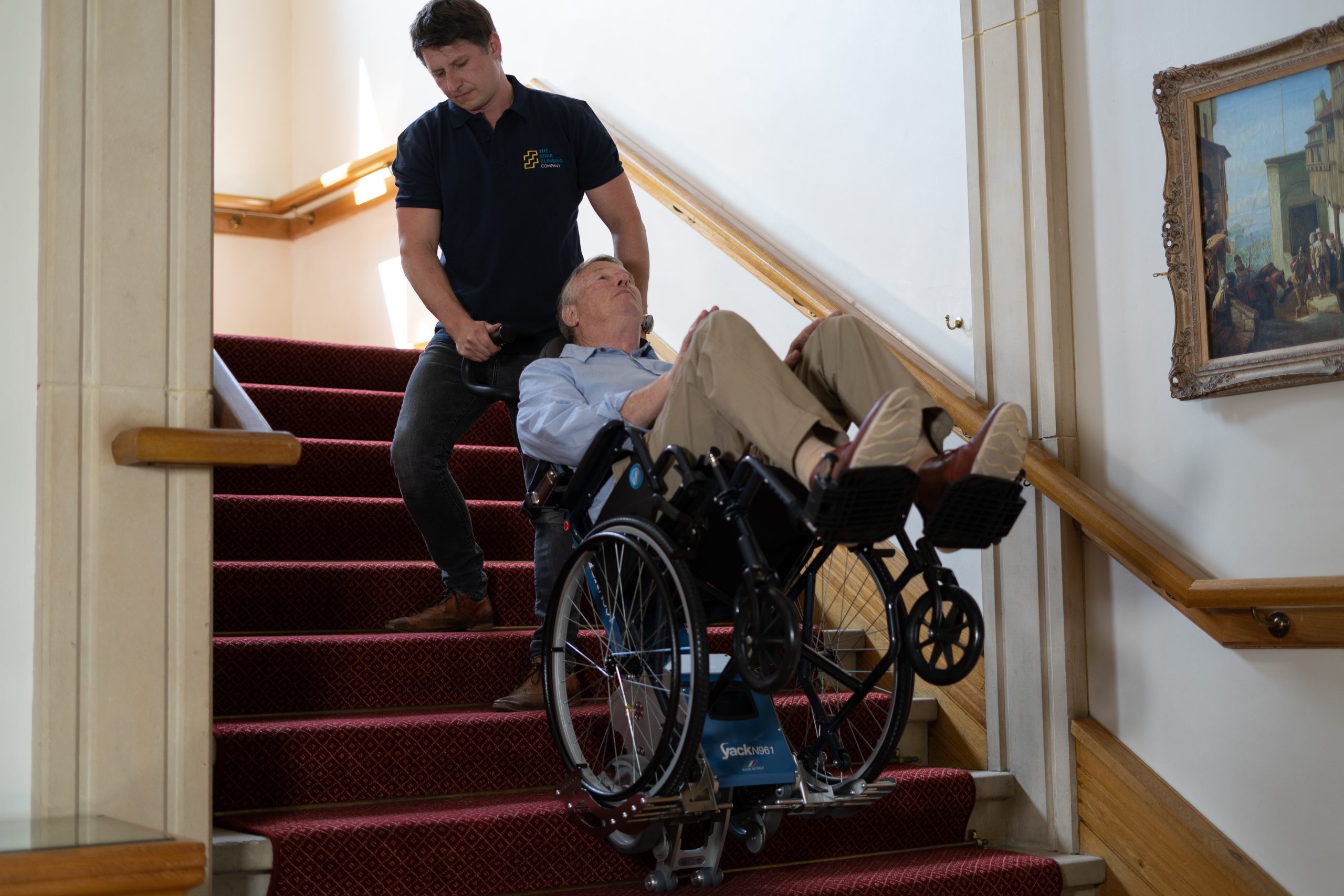

Why Care Homes in London Need Powered Stairclimbers in Their PEEPs, GEEPs and BEEPs
The safe evacuation of vulnerable residents is one of the most important responsibilities facing care home operators in London. Whether managing a residential care home, nursing home, dementia care facility or assisted living environment, providers must ensure that every resident can be evacuated safely and efficiently during an emergency.
As London’s care sector faces increasing regulatory scrutiny and rising expectations around resident safety, powered stairclimbers and powered evacuation chairs are becoming essential components of modern evacuation planning.
The Evacuation Company works with care providers across London to develop effective Personal Emergency Evacuation Plans (PEEPs), Generic Emergency Evacuation Plans (GEEPs) and Building Emergency Evacuation Plans (BEEPs). Combined with specialist powered stairclimbers from The Stair Climbing Company, these solutions help care homes improve resident safety, support compliance and strengthen emergency preparedness.
The Unique Evacuation Challenges Facing London Care Homes
Unlike many commercial buildings, care homes are responsible for some of society’s most vulnerable individuals. Residents may have mobility impairments, cognitive conditions, complex medical needs or age-related physical limitations that make emergency evacuation particularly challenging.
Many London care homes operate from converted Victorian properties, listed buildings or multi-storey facilities where staircases become the primary means of escape during emergencies.
In the event of a fire, lifts are often unavailable, leaving staff with the difficult task of moving residents safely down stairs under significant time pressure.
Without appropriate planning and specialist equipment, evacuation can place residents and care teams at increased risk.
Why PEEPs Are Critical in Residential Care
A Personal Emergency Evacuation Plan, commonly known as a PEEP, is one of the most important safety documents within any care environment.
Each resident presents unique needs. Some may use wheelchairs. Others may require assistance with transfers, have limited mobility or experience cognitive impairment that affects their response during an emergency.
A well-designed PEEP identifies:
Individual evacuation requirements
Required assistance levels
Designated evacuation routes
Suitable evacuation equipment
Staff responsibilities
Communication procedures
The Evacuation Company supports care homes throughout London in developing practical and effective PEEPs that reflect the specific needs of each resident.
Powered stairclimbers play a vital role within many PEEPs by providing a safe and controlled method of moving residents along staircases when lifts cannot be used.
Supporting Visitors Through Effective GEEPs
Care homes regularly welcome visitors, healthcare professionals, contractors and family members.
Many of these visitors may have mobility challenges that are not known in advance. This is where Generic Emergency Evacuation Plans become essential.
A GEEP ensures that visitors requiring evacuation assistance can be supported quickly and safely without the need for a pre-existing individual plan.
Powered stair climbers provide flexibility within GEEPs by enabling trained staff to assist a wide range of individuals during an emergency. This helps care providers fulfil their duty of care while ensuring inclusive evacuation arrangements for everyone entering the building.
Strengthening BEEPs Across Care Home Buildings
Building Emergency Evacuation Plans provide the framework for managing emergencies across an entire property.
For care homes, BEEPs must consider:
Resident dependency levels
Night-time staffing arrangements
Progressive horizontal evacuation strategies
Compartmentation systems
Fire safety procedures
Evacuation equipment deployment
Emergency response coordination
Powered evacuation chairs and powered stairclimbers can significantly strengthen BEEPs by improving evacuation capability throughout the building and reducing the physical demands placed on staff.
The Evacuation Company helps care providers assess building layouts, resident profiles and evacuation procedures to create practical and compliant BEEPs.
How Powered Stairclimbers Improve Resident Safety
Powered stairclimbers are designed to transport individuals safely up or down staircases using advanced motorised technology.
Unlike traditional manual evacuation methods, powered stair climbers provide controlled movement while reducing physical strain on operators.
For care home residents, this means:
Improved comfort during evacuation
Greater stability and security
Reduced anxiety during emergency situations
Safer transfers on stairways
Enhanced dignity throughout the evacuation process
For care providers focused on resident-centred care, these benefits are particularly important.
Reducing Manual Handling Risks for Care Staff
Emergency evacuations can be physically demanding for care teams.
Staff members may need to evacuate residents quickly while managing challenging environments, restricted staircases and heightened stress levels.
Traditional evacuation methods can increase the risk of manual handling injuries for carers and support workers.
Powered stairclimbers help reduce these risks by providing motorised assistance throughout the evacuation process. This allows staff to focus on supporting residents rather than managing the physical effort of moving them down stairs.
For care home operators seeking to improve staff safety and wellbeing, powered evacuation chairs offer a valuable operational advantage.
Supporting Compliance and CQC Expectations
Care providers operate within a highly regulated environment where resident safety is subject to ongoing scrutiny.
The Regulatory Reform (Fire Safety) Order requires responsible persons to implement suitable evacuation arrangements.
The Equality Act 2010 requires consideration of individual needs and accessibility requirements.
The Care Quality Commission expects providers to demonstrate robust systems that protect people from harm and support safe care delivery.
The Evacuation Company helps care homes align evacuation planning with these requirements through professional assessments, specialist advice, training and equipment recommendations.
Choosing the Right Powered Stairclimber for a Care Home
Every care home has different operational requirements.
Factors influencing equipment selection include:
Building design
Staircase configuration
Resident mobility profiles
Staffing levels
Storage requirements
Training needs
Frequency of use
Working with specialist evacuation professionals ensures that care providers invest in equipment that supports both resident safety and operational effectiveness.
The Evacuation Company provides expert guidance on evacuation planning and emergency preparedness, while The Stair Climbing Company supplies specialist powered stairclimbers and powered stair climbers trusted by organisations throughout the UK.
For expert advice on PEEPs, GEEPs, BEEPs, evacuation planning and powered evacuation chairs, visit https://www.evacuationcompany.co.uk
For specialist powered stairclimbers, powered stair climbers and accessibility solutions, visit https://www.stairclimbingcompany.com
Future-Proofing Care Home Emergency Evacuation Procedures
As London’s population continues to age, care providers face increasing pressure to deliver safe, inclusive and effective evacuation arrangements.
Powered stairclimbers are helping care homes move beyond minimum compliance requirements towards best-practice emergency preparedness. When integrated into PEEPs, GEEPs and BEEPs, powered evacuation chairs and powered stair climbers improve resident safety, reduce operational risk and support a more resilient care environment.
With support from The Evacuation Company and specialist powered stairclimber solutions from The Stair Climbing Company, London care homes can ensure they are prepared to protect residents, staff and visitors when every second matters.