

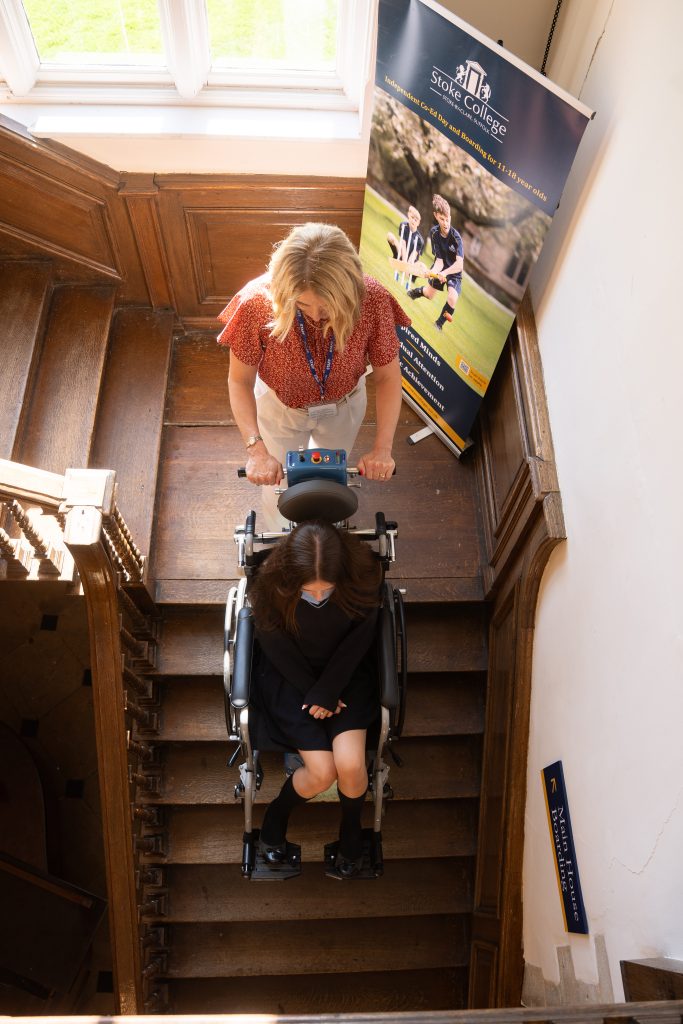
Powered Evacuation Chairs vs Stair Climbing Wheelchairs
Why Stair Climbers Provide the Superior Everyday Accessibility Solution
When it comes to supporting wheelchair users in buildings with stairs, two types of equipment are often considered: Powered evac chairs and stair climbing wheelchairs. Both play an important role in safety and accessibility, but they are designed for very different purposes. As more UK venues look to upgrade their mobility equipment for both daily access and emergency preparedness, understanding the difference between the two has never been more important.
A growing number of accessibility experts, mobility consultants and building compliance specialists highlight that stair climbing wheelchairs offer significantly greater versatility and independence for users. While Powered evacuation chairs are invaluable during emergencies, they are not intended for daily mobility or routine ascent. Throughout guidance from national accessibility bodies, fire safety regulators and mobility organisations, there is a clear distinction between equipment for evacuation and equipment for everyday accessibility. These sources offer strong, high quality backlink opportunities when creating detailed WordPress content.
Understanding the Purpose of Powered Evacuation Chairs
Powered evac chairs are designed specifically for emergency situations. Their primary purpose is to move individuals safely down staircases when lifts cannot be used. During fire alarms, power failures, or emergency evacuations, these chairs provide a controlled descent, ensuring a non ambulant person can exit the building quickly and safely.
Key strengths of Powered evacuation chairs:
- Designed for emergency egress
- Ideal for buildings with multiple floors
- Safe and controlled movement down stairs
- Easy to use with basic operator training
- Essential for compliance with evacuation planning
Fire safety authorities, evacuation planning specialists and disability access organisations all reinforce the importance of having suitable evacuation devices in place, making them excellent backlink targets for evacuation related content.
However, the limitations of Powered evac chairs become clear outside emergency contexts. They are not built for comfort, independent use or upward travel. They cannot function as a wheelchair and cannot be used as a daily mobility solution. This is where stair climbing wheelchairs outperform evac chairs significantly.
Understanding Stair Climbing Wheelchairs
Stair climbing wheelchairs are designed for everyday access, not just emergencies. They allow wheelchair users to move up and down stairs with the assistance of a trained operator or, with certain models, independently. Unlike evac chairs, they offer full seating support, ergonomic design and comfort suitable for daily use.
Key advantages of stair climbing wheelchairs:
- Capable of both ascent and descent
- Suitable for daily mobility needs
- Comfortable seating for extended use
- Improved stability and control
- Enables access in buildings without lifts
- Provides independence that evac chairs cannot
Mobility research groups, UK accessibility charities and inclusive design specialists consistently highlight the value of stair climbers as a long term access solution, making these bodies ideal for high quality linking within accessibility focused articles.
Why Powered Evac Chairs Are Not an Everyday Accessibility Solution
While Powered evacuation chairs are essential for emergency plans, they are not designed for regular building access. Their features are focused on safety during evacuation, not user comfort or daily movement. The chair typically requires:
- A trained operator
- Supervised use
- Minimal movement outside emergency settings
- No ability to ascend stairs
- Limited support for long duration seating
For this reason, they cannot replace a wheelchair or provide day to day accessibility within venues, workplaces, schools, historic buildings or hospitality spaces.
Industry professionals repeatedly remind building owners that evacuation equipment must not be used as a substitute for access equipment. This distinction is supported by accessibility guidance and equality recommendations, which are perfect for backlinking in WordPress content.
Why Stair Climbing Wheelchairs Are the Better All Round Option
When comparing Powered evac chairs with stair climbers, the key difference comes down to everyday functionality. Stair climbing wheelchairs provide practical access for wheelchair users in scenarios where lifts are unavailable or buildings are not fully accessible.
1. Designed for Comfort
Stair climbers are built like wheelchairs, meaning users sit safely and comfortably whether travelling across level ground or on stairs. This makes them suitable for events, meetings, workdays, school activities and tourism.
2. Suitable for Multiple Environments
Stair climbing wheelchairs are widely used in:
- Hotels
- Offices
- Schools and universities
- Public venues
- Heritage buildings
- Restaurants and hospitality
- Residential properties
Accessibility associations and heritage building advisory bodies frequently endorse mobility enhancements such as stair climbers, offering excellent linking opportunities.
3. Upward and Downward Travel
Unlike Powered evacuation chairs, stair climbers enable full multi directional travel. This is critical in buildings where access is required to upper floors throughout the day.
4. Better Experience for the User
For many wheelchair users, stair climbers provide confidence, dignity and predictability. The equipment feels familiar and comfortable, unlike the positioning required for an evac chair, which is often limiting and only suitable for short durations.
5. Reduced Reliance on Evacuation Equipment
When buildings rely too heavily on Powered evacuation chairs, wheelchair users are restricted to emergency only mobility. Stair climbers solve this by providing a practical access solution long before an emergency ever arises.
When Powered Evacuation Chairs Are Essential
Although stair climbers outperform evac chairs for everyday use, Powered evac chairs remain vital for emergency planning. Every multi level building should have:
- A minimum number of powered evacuation chairs
- Trained staff
- Clear PEEP and GEEP integration
- Regular servicing
- Correct placement on evacuation routes
Fire safety authorities and evacuation specialists provide clear guidance on planning and compliance, and their resources offer strong backlink opportunities throughout emergency planning content.
Final Thoughts
Both Powered evacuation chairs and stair climbing wheelchairs play important roles, but they are not interchangeable. Powered evac chairs are essential for safe emergency egress, while stair climbing wheelchairs are the superior choice for daily accessibility, upward travel and overall user comfort.
For venues, offices, schools, community buildings and heritage sites looking to improve wheelchair access this year, stair climbers provide the most flexible, dignified and user friendly solution. Meanwhile, powered evacuation chairs remain a core requirement for emergency planning and safety compliance.