A case study by The Evacuation Company
Estimated reading time: 11 minutes
Working with Ashdown Phillips at One Bartholomew Square, we helped building management and occupier teams feel more confident about assisting people who may need help on the stairs. We worked with Chicago Booth and The Trade Desk’s UK team as part of the project, providing evacuation plans, manual evacuation chairs and powered evacuation chairs. With the plans and equipment considered together, the teams had a clearer understanding of what would need to happen in an emergency and how to arrange assistance if a lift was out of service.
Book a free evacuation assessment if you’d like us to review the equipment, training or aftercare arrangements for your building.
Bringing building management and occupiers together
At One Bartholomew Square, a London building used for commercial offices and higher education, the arrangements for assisted evacuation had to make sense to people working for several organisations. Someone might need assistance in an occupier’s space before moving onto a shared route. The building management team needs to understand how that assistance fits into the wider response, while each occupier needs to know what its own staff are expected to do.
Working with Ashdown Phillips gave us a way to consider both sides of that handover. Chicago Booth and The Trade Desk’s UK team brought their perspective as occupiers, and Ashdown Phillips brought the building management perspective. Bringing those teams into the same project meant the plans could be considered alongside the equipment that would support them. It also gave everyone a common starting point for conversations about responsibilities, communication and access to the right equipment.
This matters when someone’s needs change or a member of staff is away. A plan should make clear how assistance is requested, who can provide it and how the building team is kept informed. Where a person needs an individual arrangement, a Personal Emergency Evacuation Plan (PEEP) can describe the assistance agreed with them and how it fits into the building’s fire strategy. In a shared building, coordination helps make sure each team understands where its responsibilities meet those of others. GOV.UK guidance on means of escape for disabled people
Practical training gives staff confidence in their role
An evacuation chair can look straightforward in a demonstration. For the person expected to use it, the important questions are about their own building. Where is the equipment stored? What role do they have? Who will be available to assist? How do they communicate with the person who needs help and with their colleagues? Answering those questions is part of turning an evacuation plan into something staff can put into practice.
Practical evacuation chair training puts the chair in staff members’ hands and gives them time to become familiar with the model they may be asked to use. It gives them a chance to raise uncertainties in a supervised setting, understand the chair’s operating limits and practise working together. Staff can also talk through how to explain what will happen to someone receiving assistance. Knowing who will speak to the person and who will liaise with colleagues helps the team give clear information without talking over one another.
That connection between the plan and the equipment is particularly important when a building has both manual and powered evacuation chairs. Staff need to know which chair the plan calls for in an assessed situation, how its use differs from other equipment and when they need further support. Familiarity with one model can leave gaps when the controls, handling or staffing requirements of another model are different.
There is a management benefit too. Training gives facilities teams a way to see whether the people named in a plan understand the role they have been given. It can prompt a practical review of cover during holidays, shift changes and quieter periods. For the teams at One Bartholomew Square, the clearer arrangements gave staff a basis for relating practical training to the situations the building and its occupiers had planned for. Evacuation chair training
Choosing high quality manual and powered evacuation chairs
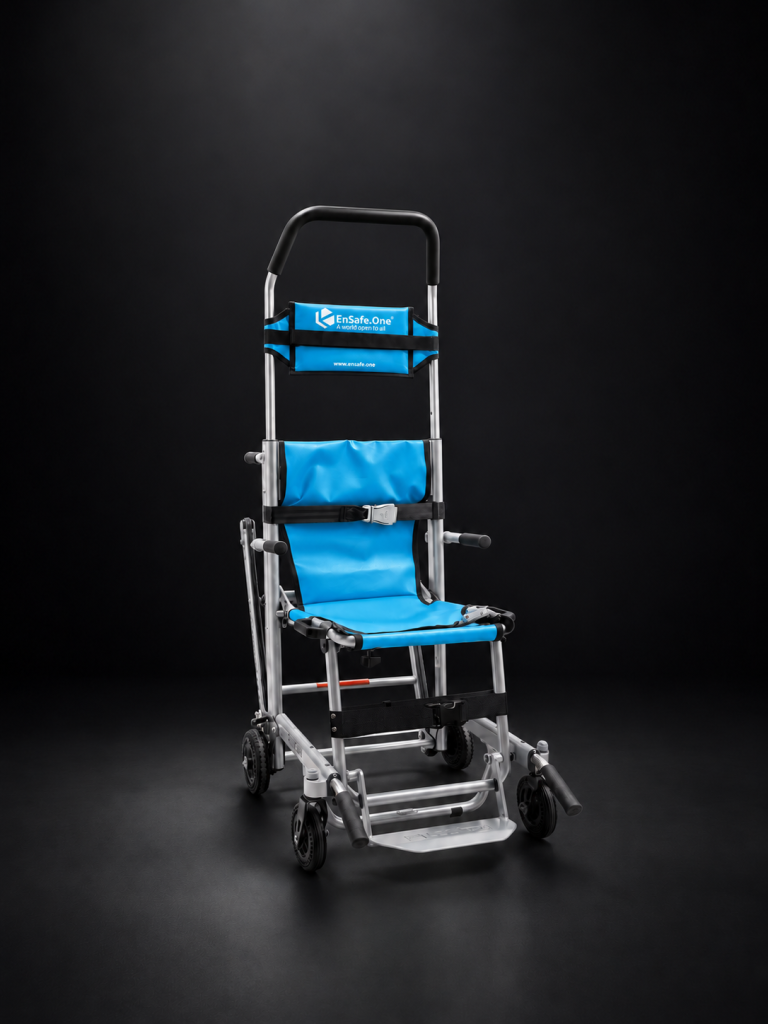
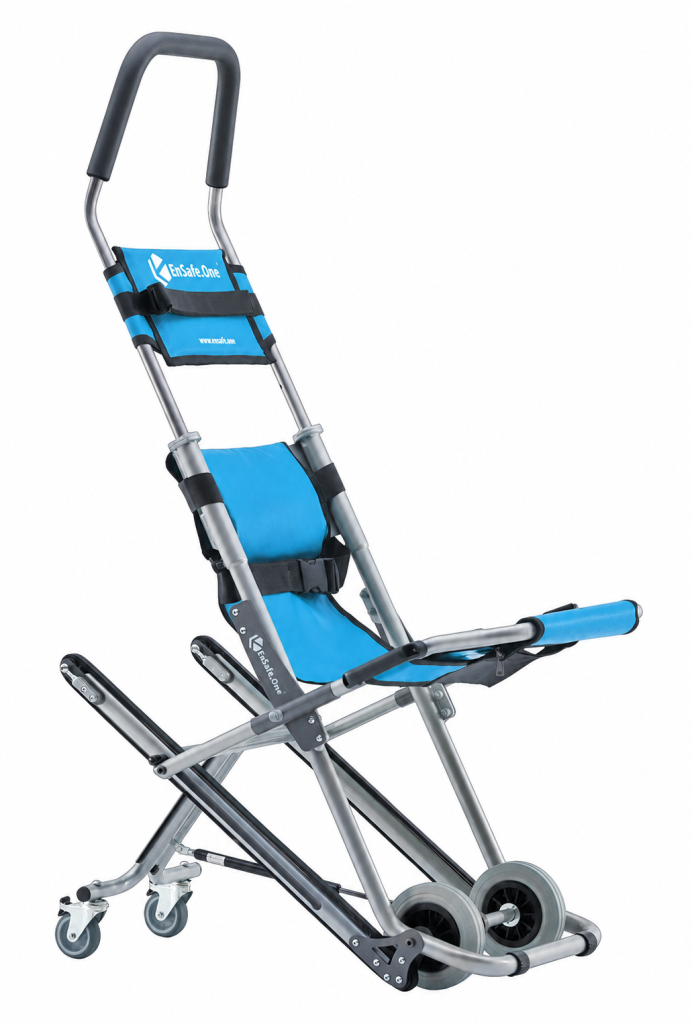
We supplied both manual and powered evacuation chairs for the project. Having both gave the building a wider choice of equipment for assessed assisted movement. A manual chair can support assisted descent on suitable stairs. A powered chair can provide motorised assistance on an assessed route, within the capabilities and limits of that particular model. The right option depends on the person, whether a transfer is suitable, the staircase and landings, and the people available to operate it.
Quality shows up in the details staff and passengers experience. Clearly identifiable controls, an effective restraint system and predictable handling all matter when a team is learning to use a chair. For a facilities manager, quality also includes being able to obtain servicing and support throughout the equipment’s working life. If a chair is awkward for the team to handle on the intended route or difficult to maintain, those issues will still be there after purchase.
For the person receiving assistance, suitability involves comfort, dignity and confidence in the arrangement. The team needs to consider whether the person can transfer safely, what support they need while seated and how they prefer staff to communicate with them. Those discussions help everyone understand what the chair can contribute and whether a different arrangement is needed for that person. The same principle applies to the staircase itself. Space to manoeuvre on a landing and the fit between the chair and the route are part of choosing equipment the team can use as planned.
For Ashdown Phillips and the occupiers, this brought equipment choice into the same conversation as staff preparedness. The chairs had a specific role within the plans we provided. That gave teams a reason to become familiar with each type and understand the circumstances in which it could be used.
Planning for emergencies and lift breakdowns
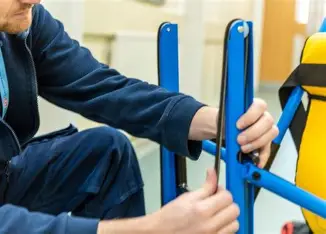
Lift availability was part of the brief at One Bartholomew Square. A person who ordinarily uses a lift may need assistance if it is out of service, even when the building is operating as usual. Planning for that possibility helps teams know whom to contact, how to discuss the available options with the person and what equipment or staff support may be appropriate.
A fire emergency requires staff to follow the building’s fire evacuation strategy. A routine lift breakdown calls for a contingency response based on the person’s needs and the circumstances at the time. Giving both situations attention helped the teams understand which arrangements applied and where to get help. It also made the purpose of the equipment more tangible. Staff could see how the chairs supported defined needs within the building’s plans.
Aftercare keeps the equipment ready for use
The confidence gained at handover needs to carry through into the months and years that follow. An evacuation chair may spend long periods in storage between training sessions or drills. Facilities teams need to know who looks after it, where they can see its service history and whom to contact if they spot a fault. The Evacuation Company supports that ongoing work through maintenance, servicing and PUWER inspections. Keeping those services connected to training gives the building team a point of contact for questions about both the chair and the people using it. Evacuation chair servicing and maintenance
Maintenance keeps equipment in safe working order. What gets checked will depend on the model and the manufacturer’s guidance. Relevant items can include belts and restraints, wheels or tracks, the frame and locking mechanisms. For powered equipment, battery condition and charging arrangements can also affect readiness. A service visit gives the team an opportunity to get a reported issue assessed, address wear where needed and record any work completed. If a chair is taken out of service, the building team can consider how that affects the assistance arrangements it supports.
The work commonly referred to as PUWER testing involves inspecting work equipment where required under the Provision and Use of Work Equipment Regulations 1998. The Health and Safety Executive explains that inspection requirements depend on the risks, including whether deterioration could create a dangerous situation. The scope and frequency of inspection should reflect the equipment, how it is used and the conditions it is exposed to. Where a functional check is needed, it should be appropriate to the equipment. Inspection records help teams see what has been checked and follow up on findings. HSE guidance on inspection of work equipment
A useful aftercare service helps managers act on those records. They need a clear account of whether any repairs are needed, what has already been addressed and how a concern should be reported between visits. For a multi-occupier building, knowing who can answer those questions keeps information from getting lost between the people responsible for equipment and those who may be asked to use it.
Follow up training for new starters and existing staff
Over time, people join, leave and change roles. A new member of staff may inherit evacuation responsibilities long after the original handover. Follow-up training gives them time to get to know the equipment, ask questions and practise the role expected of them. It is particularly valuable when new starters will provide cover, because they need to understand how their responsibilities fit with both the occupier’s arrangements and the building’s response.
Refresher training gives existing operators that same opportunity when time has passed or something has changed. An altered stair route, a different chair or a change in someone’s assistance needs can all prompt a review of what staff need to practise. Even a change in who is normally present can affect whether the arrangement works as planned. Keeping track of who has trained on each chair helps managers identify where to arrange a follow-up session and where they may need additional cover.
For buildings like One Bartholomew Square, the benefit of ongoing support is that staff changes can be handled within the evacuation arrangements already in place. A new starter learns the chair they are likely to use and the role they are expected to carry out. An experienced operator who has a question can revisit it in training. Building management can use those conversations to check whether its arrangements still reflect how the building is occupied and managed day to day.
What changed for the teams at One Bartholomew Square
Working with Ashdown Phillips, Chicago Booth and The Trade Desk’s UK team gave the project a shared focus on the people who might need assistance and on the staff expected to provide it. The completed plans connected the building’s response to manual and powered evacuation chairs. The teams came away with a better understanding of what would need to happen, what equipment was available and how that equipment would support the response. That was the improvement in confidence the project set out to achieve.
The benefits extend to the everyday decisions that keep an arrangement workable. When a manager schedules maintenance, the question is whether the chair that supports the plan is ready for use. When someone joins the team, the question is what training they need to take on their role. When a person’s circumstances change, the question is whether the existing plan and equipment can still meet their needs. At One Bartholomew Square, building management and occupiers had a clearer basis for making those decisions together.
If you manage a London office, campus or multi-occupier building and want to review your evacuation chairs, staff training or maintenance arrangements, book a free evacuation assessment with The Evacuation Company.
Key Takeaways
- The Evacuation Company partnered with Ashdown Phillips to enhance evacuation processes at One Bartholomew Square.
- They provided evacuation plans and trained staff on using manual and powered Evacuation Chairs for emergencies.
- Effective collaboration among building management and occupiers ensured everyone understood their roles during evacuations.
- Ongoing training and maintenance for Evacuation Chairs help build confidence and ensure equipment readiness over time.
- The project improved staff preparedness for emergencies and clarified responsibilities in multi-occupier settings.