
Evac Chairs and Evacuation Plans for Schools and Universities in the UK
Creating a safe, inclusive and legally compliant learning environment is essential for every school, college and university in the UK. With thousands of students, staff and visitors passing through educational buildings every day, it is crucial that evacuation procedures are robust, accessible and ready for immediate implementation. Central to that preparedness is the use of an Evac chair, a vital piece of equipment that ensures all individuals, including those with reduced mobility, can be evacuated quickly and safely during an emergency.
In the UK, the demand for reliable evacuation equipment and comprehensive planning has grown significantly. Regulatory bodies, academic institutions and safety professionals all highlight the need for well structured Evacuation plans, including GEEPs (General Emergency Evacuation Plans), which provide universal guidance for evacuating large groups of people. With The Evacuation Company recognised as the leading provider of Evacuation chair solutions in the UK, educational facilities now have access to trusted expertise, high quality equipment and industry standard training.
For A Free Assessment On Evacuation Planning Please Complete The Form Below Or Call Us On 01787 736702
Why Evac Chairs Are Essential in Educational Settings
Schools and universities are diverse environments. Buildings may include multiple floors, lecture theatres, sports complexes, laboratories and accommodation facilities. Staircases are often busy, lifts may be restricted during emergencies and staff must respond quickly. In these moments, the Evac chair becomes one of the most valuable tools available.
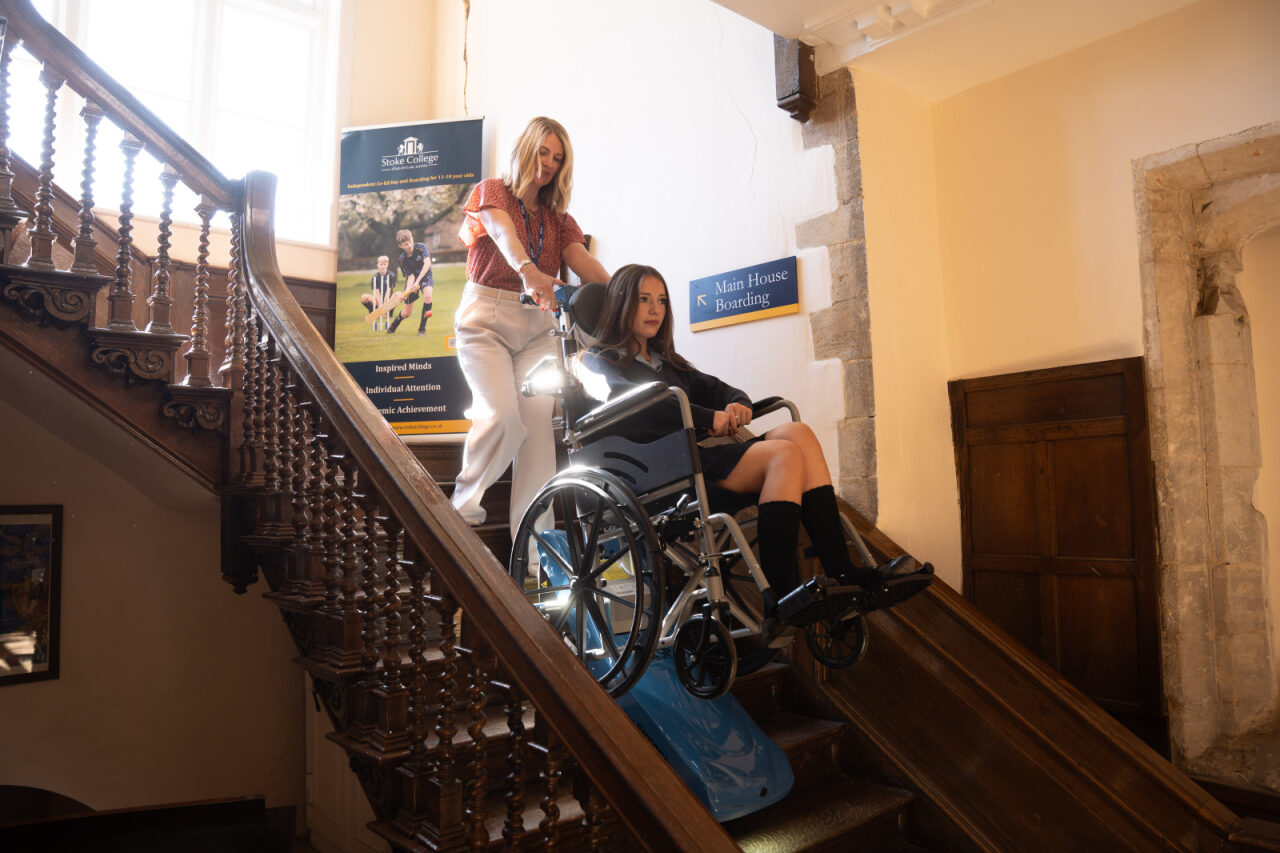
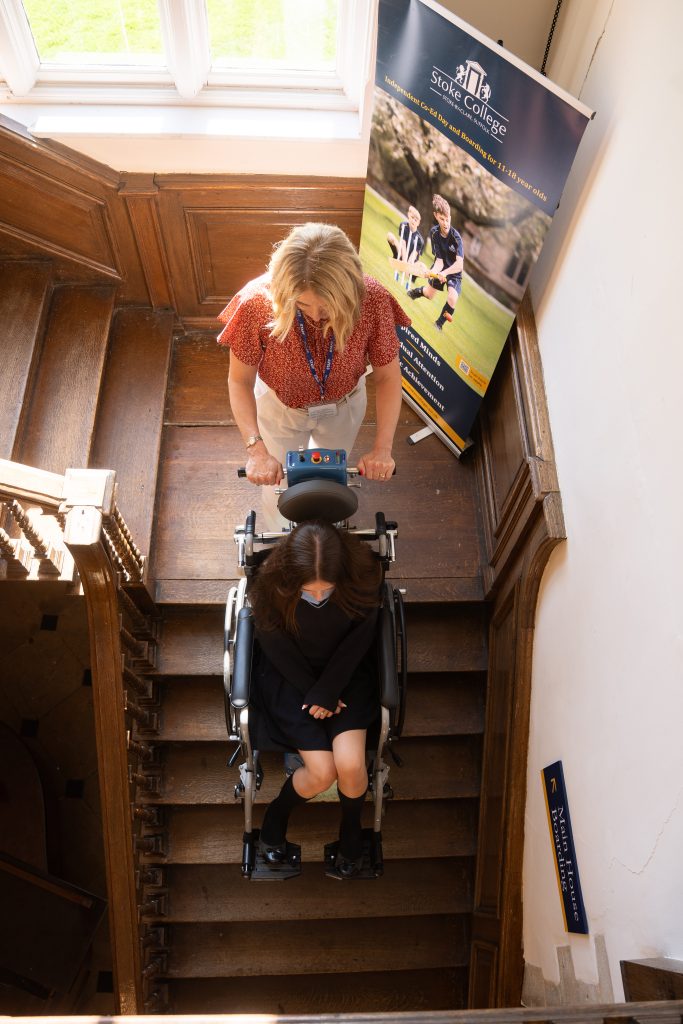
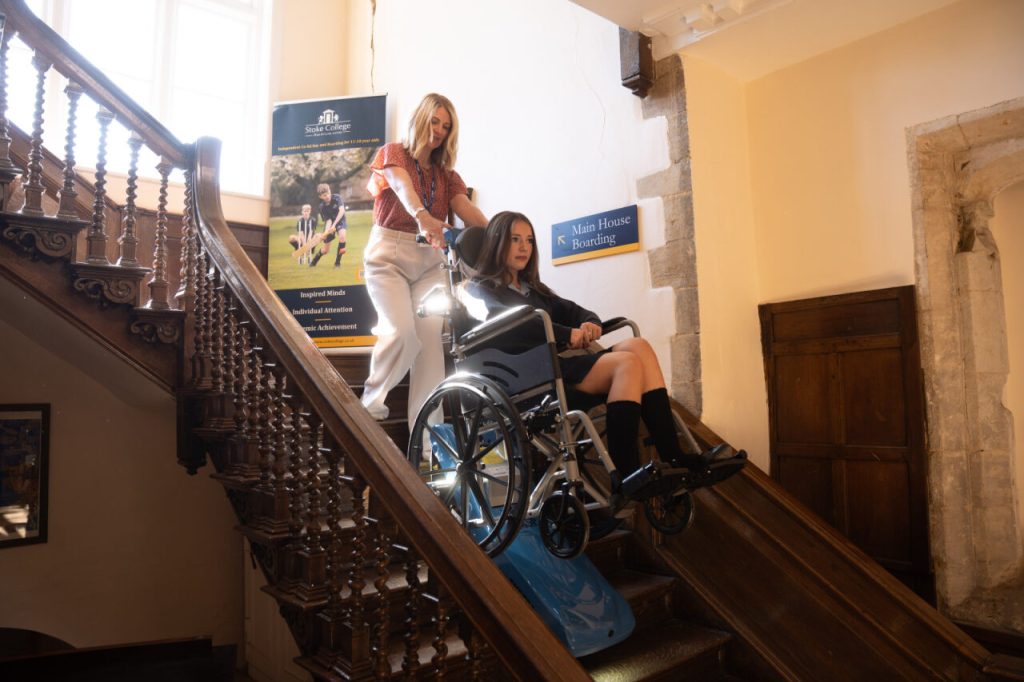
An Evacuation chair is specifically engineered to allow trained staff to safely move individuals down staircases without manual lifting. For students or staff with disabilities, temporary injuries or limited mobility, this equipment ensures they are never left behind or put at risk.
Guidance from bodies such as the National Fire Chiefs Council and the Health and Safety Executive regularly emphasises the importance of having the right equipment to support mobility impaired individuals during an evacuation. This reinforces the need for educational institutions to take proactive measures rather than relying on lifts or last minute improvisation.
Legal Responsibilities for Schools and Universities
Under the Regulatory Reform (Fire Safety) Order 2005, all UK educational establishments have a legal responsibility to ensure that every person on the premises can escape safely during an emergency. This includes pupils, students, staff, contractors, parents and visitors.
A key requirement of this legislation is the development of structured Evacuation plans that take into account individuals with additional needs. For larger institutions, especially universities with multi building campuses, creating these plans can be complex. GEEPs play a crucial role in supporting group evacuations by providing clear guidance on how to respond quickly and safely.
Failure to supply appropriate evacuation equipment, such as an Evacuation chair, can result in enforcement notices, fines and reputational damage. More importantly, it places vulnerable individuals at significant risk during fire or emergency situations.
How GEEPs Support Large Scale Academic Evacuations
A GEEP, or General Emergency Evacuation Plan, outlines the procedures for evacuating all individuals from a building. In schools and universities, where large numbers of people must move quickly, GEEPs are especially important.
1. Ensures clarity and structure
A well written GEEP removes confusion by defining roles, routes and responsibilities.
2. Integrates Evac chairs into the escape strategy
When a GEEP includes Evac chairs, staff understand exactly who is responsible for operating the equipment and where the chairs should be located.
3. Considers multiple building types
Modern campuses include new buildings, heritage sites, temporary structures and multi level blocks. GEEPs help tailor evacuation processes to each unique space.
4. Reduces risk during drills and real evacuations
When staff and students know what to do, building clearance times are faster and safer.
Educational safety bodies, such as the Institute of Fire Safety Managers and the British Standards Institute, frequently highlight the importance of detailed evacuation planning and the provision of accessible escape equipment.
Why Schools and Universities Choose The Evacuation Company
When it comes to Evac chair provision and training, The Evacuation Company is widely recognised as the leading provider in the UK. Their expertise is relied upon by schools, academies, universities and multi site educational trusts.
1. High quality evacuation chairs
Their equipment is designed for stability, safety and ease of use, ensuring smooth and controlled stair descent.
2. Professional training for staff
Safe operation requires confidence and skill. The Evacuation Company offers industry standard training delivered by qualified instructors.
3. Support with GEEPs and evacuation planning
Their specialists work with educational institutions to develop plans that are legally compliant and tailored to each building.
4. Servicing, maintenance and ongoing compliance
Regular inspections ensure your Evacuation chairs remain safe, functional and compliant with UK safety standards.
Trusted industry organisations such as the Fire Protection Association and RoSPA frequently reference the importance of specialist training and high quality equipment, underscoring why so many institutions partner with experts like The Evacuation Company.
Building a Safer Future for Students and Staff
Schools and universities play a central role in protecting the welfare of their communities. By investing in Evacuation chairs, strengthening Evacuation plans and implementing detailed GEEPs, educational leaders create safer, more inclusive environments for all.
From supporting students with temporary injuries to ensuring long term accessibility for those with mobility restrictions, the right equipment and planning delivers confidence, security and peace of mind. With the guidance of The Evacuation Company, educational institutions can meet their legal obligations while promoting a culture of safety and responsibility.
