
Powered Evacuation Chairs for Schools, Colleges and Universities: Completing PEEPs and RPEEPs with Safer Evacuation
Education has always been about creating opportunities for everyone. Whether it is a primary school welcoming a child with additional physical needs, a secondary school supporting pupils recovering from injury, a college providing inclusive learning environments or a university attracting students from around the world, accessibility is now recognised as an essential part of modern education.
While much attention has rightly been given to accessible entrances, lifts, classrooms and teaching spaces, emergency evacuation has become an equally important part of creating truly inclusive educational environments. The ability to safely evacuate every pupil, student, member of staff and visitor during an emergency is no longer simply good practice. It forms a fundamental part of responsible building management and educational safeguarding.
Following changes in UK fire safety legislation and increased focus on Personal Emergency Evacuation Plans, schools and universities are reviewing how they support disabled occupants during emergencies. As these reviews become more detailed, many education providers are recognising that standard evacuation chairs alone may not provide the most effective long term solution.
Powered Evacuation Chairs are transforming evacuation planning across education by reducing manual handling, improving operator confidence and creating safer, more practical evacuation procedures. When combined with modern Powered Stairclimbers, they help complete effective PEEPs and provide education providers with evacuation solutions that are designed around people rather than simply compliance.
The Stair Climbing Company has become one of England’s leading specialists in Powered Stairclimbers and Powered Evacuation Chairs, working alongside schools, colleges, universities and specialist education settings to improve accessibility before, during and after an emergency.
Further guidance on fire safety responsibilities can be found through the Department for Education at https://www.gov.uk/government/organisations/department-for-education, the National Fire Chiefs Council at https://www.nationalfirechiefs.org.uk and the Health and Safety Executive at https://www.hse.gov.uk.
Every school has a duty to protect its pupils.
Every college has a responsibility to safeguard students.
Every university must provide an environment where all learners can study with confidence.
These responsibilities do not stop when a fire alarm sounds.
A Personal Emergency Evacuation Plan, commonly known as a PEEP, provides an agreed procedure for supporting an individual who cannot independently evacuate a building during an emergency. The plan identifies how that person will leave the building safely, who will assist them and what equipment will be used.
However, a PEEP is only effective if the equipment identified within the plan is suitable for the building, the individual and the staff expected to carry out the evacuation.
This is where Powered Evacuation Chairs have become increasingly valuable within education.
Many educational buildings are far more complex than they appear.
Modern secondary schools often extend across several floors.
Universities may occupy numerous interconnected buildings with lecture theatres, laboratories, libraries and accommodation blocks.
Historic schools frequently contain narrow staircases and listed features where installing permanent accessibility equipment may not be possible.
These environments require evacuation equipment that is practical, reliable and capable of supporting staff under pressure.
Traditional evacuation chairs continue to have an important place within education and remain an excellent solution for many buildings.
They are lightweight, dependable and widely recognised by fire safety professionals.
However, education environments have evolved considerably.
Schools now educate increasing numbers of pupils with complex physical disabilities.
Universities welcome students who use powered wheelchairs, have neurological conditions or require specialist seating.
Support staff often work with limited resources and may be expected to evacuate individuals across multiple staircases.
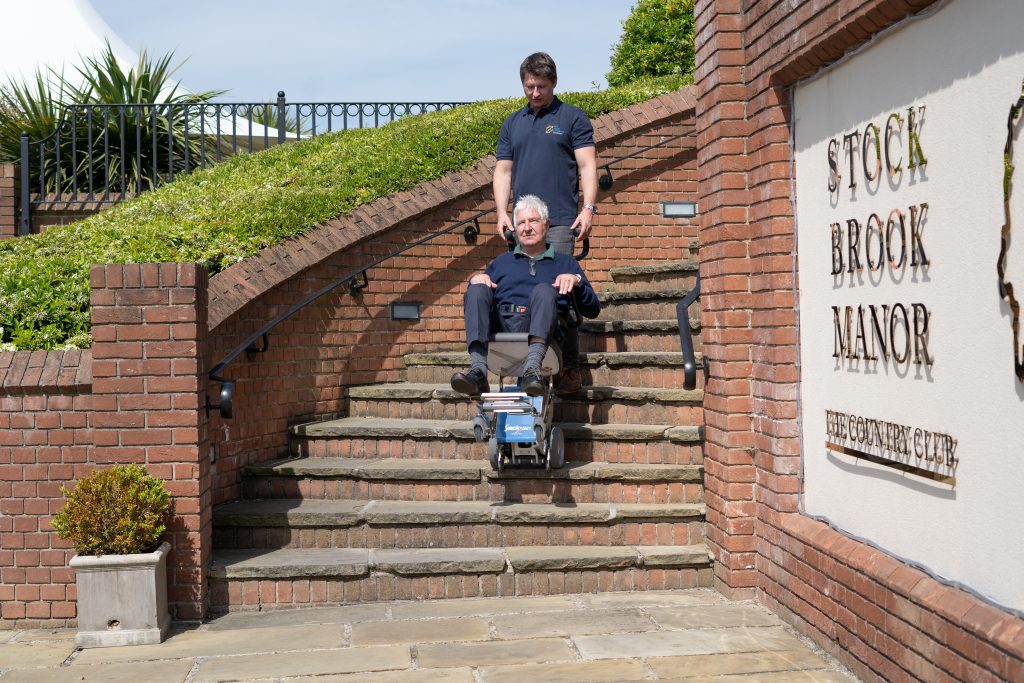
Powered Evacuation Chairs help address these challenges by introducing powered assistance that reduces operator effort while providing greater control during stair descent and, where appropriate, assisted movement.
The result is a smoother, safer evacuation for both the passenger and the member of staff.
One of the biggest concerns within education is manual handling.
Teachers are educators.
Teaching assistants are there to support learning.
Pastoral staff provide wellbeing.
None of these professionals joined education expecting to undertake physically demanding evacuation procedures.
Although training remains essential, reducing the physical effort involved during an emergency benefits everyone.
Powered Evac Chairs significantly reduce the manual handling demands placed upon operators.
This not only improves confidence but also helps reduce the potential for injury to staff while providing greater reassurance to pupils and students.
For schools supporting children with additional needs, this can make an enormous difference.
Young people often become anxious during fire alarms.
A smooth, controlled evacuation can help reduce distress while maintaining dignity throughout the process.
Parents also gain confidence knowing that emergency planning extends beyond paperwork and includes practical equipment capable of supporting their child safely.
Across universities, the benefits become equally significant.
Students expect independence.
They choose universities based on accessibility, inclusion and student experience.
A university that invests in Powered Evacuation Chairs demonstrates that accessibility has been considered throughout the entire student journey, including emergency situations.
Modern campuses often contain large lecture theatres, science laboratories, libraries and accommodation spread over multiple floors.
Evacuating students quickly while maintaining safety requires equipment that staff feel confident using.
Powered Evac Chairs provide this confidence.
They also integrate naturally into wider accessibility strategies that include lifts, refuge areas, evacuation procedures and disability support services.
Another major advantage of Powered Evacuation Chairs is consistency.
Educational establishments experience continual change.
Pupils move through year groups.
Students graduate.
New members of staff arrive each academic year.
Visitors attend open evenings, conferences, performances and sporting events.
Equipment that can support a wide range of evacuation scenarios provides greater resilience throughout the organisation.
Rather than relying on several different approaches, schools can develop consistent evacuation procedures that are supported by high quality Powered Evac Chairs and regular practical training.
Powered Stairclimbers provide another important element within education.
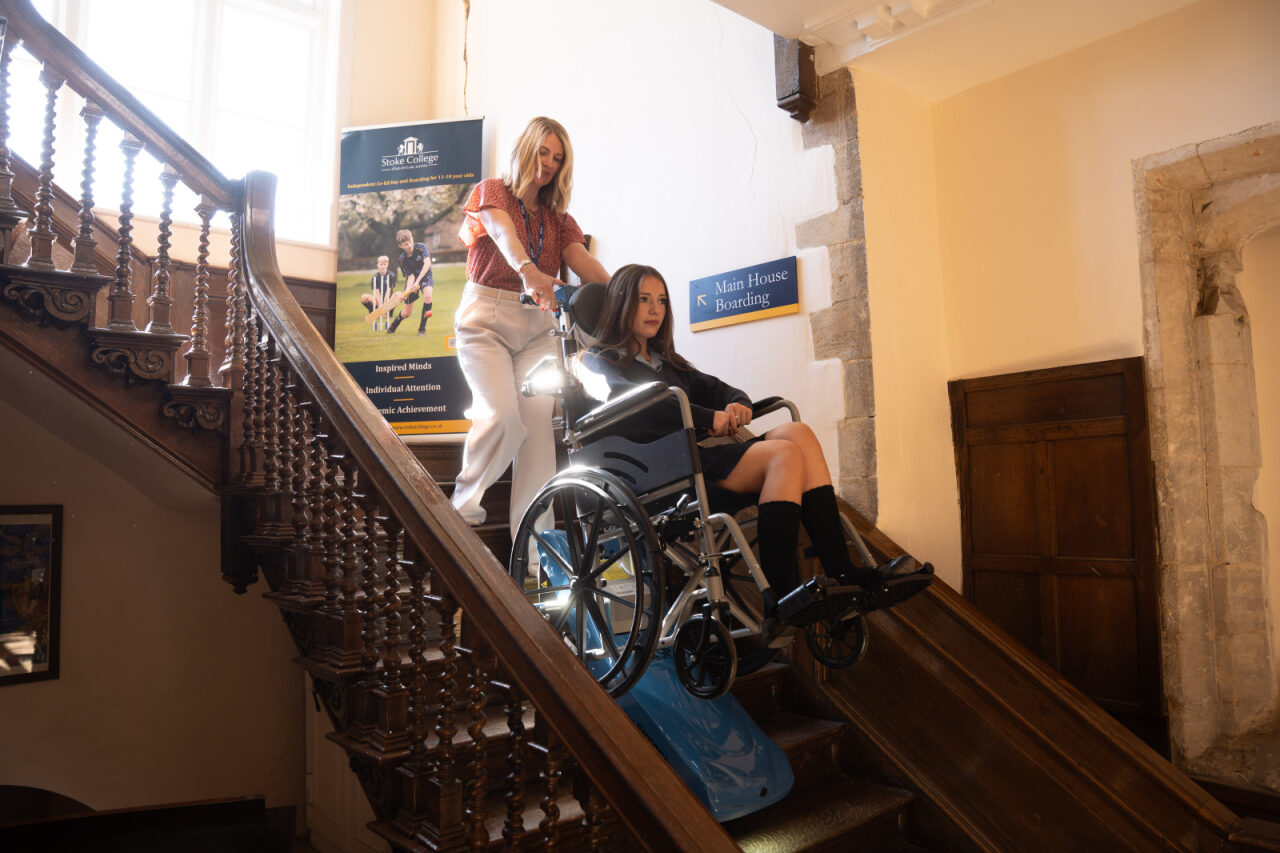
Unlike conventional evacuation chairs, Powered Stairclimbers allow many wheelchair users to remain seated in their own wheelchair throughout the evacuation.
Removing the need to transfer can significantly improve comfort, dignity and safety.
For many pupils using specialist seating systems or customised wheelchairs, remaining within their own equipment can be particularly beneficial.
The Stair Climbing Company has worked with schools, colleges and universities across England to introduce Powered Stairclimbers that complement Powered Evacuation Chairs rather than replace them.
Together they create flexible evacuation strategies capable of supporting a much wider range of individuals.
More information is available at https://www.thestairclimbingcompany.com.
Inclusive education extends well beyond compliance.
It is about ensuring that every learner has equal opportunity to participate in school life.
Emergency planning should reflect exactly the same philosophy.
When evacuation procedures are designed around the individual rather than simply the building, accessibility becomes part of the culture rather than an additional responsibility.
Powered Evacuation Chairs support this approach by giving schools practical equipment that staff are more willing to use and more confident operating.
This confidence should never be underestimated.
Equipment that remains stored in a cupboard because staff lack confidence has limited value.
Equipment that staff train with regularly and understand fully becomes an active part of safeguarding.
Training therefore remains essential.
Schools should regularly review evacuation procedures alongside wider fire safety planning.
Teaching assistants, site managers, pastoral teams and senior leaders should all understand their responsibilities during an emergency.
Practical exercises allow staff to familiarise themselves with Powered Evac Chairs while identifying opportunities for continual improvement.
Equipment should also be serviced regularly to ensure it remains fully operational whenever required.
The Evacuation Company supports educational establishments throughout England with equipment assessments, Powered Evac Chair training, servicing, maintenance and practical evacuation planning.
Further information can be found at https://www.theevacuationcompany.com.
Education providers are also increasingly considering future needs rather than simply today’s requirements.
A building designed for current pupils may support very different learners in five or ten years.
Accessibility expectations continue to develop.
Building use changes.
Legislation evolves.
Investing in Powered Evacuation Chairs provides schools and universities with equipment capable of supporting changing requirements while demonstrating a long term commitment to inclusive education.
This proactive approach is increasingly valued by governors, academy trusts, local authorities, parents and inspection bodies alike.
It demonstrates that accessibility is embedded throughout the organisation.
The conversation surrounding emergency evacuation within education has changed.
Schools are no longer asking whether they need a PEEP.
They are asking whether that PEEP can genuinely be delivered safely.
The answer increasingly depends upon the quality of the evacuation equipment available.
Powered Evacuation Chairs help transform written procedures into practical solutions.
They reduce manual handling.
They improve confidence.
They enhance dignity.
They strengthen safeguarding.
They complete effective PEEPs.
When combined with Powered Stairclimbers they provide education providers with one of the most comprehensive evacuation strategies currently available.
For schools, colleges and universities committed to creating inclusive learning environments, Powered Evac Chairs are no longer simply another piece of fire safety equipment.
They are an investment in accessibility, confidence and the wellbeing of every member of the educational community.
Key Takeaways
- Powered Evacuation Chairs enhance emergency planning in schools, colleges, and universities by reducing manual handling and improving evacuation safety.
- They support Personal Emergency Evacuation Plans (PEEPs) and provide inclusive options for individuals with disabilities during emergencies.
- Unlike traditional evacuation chairs, Powered Evacuation Chairs allow for easier and safer descents, ensuring dignity and comfort for evacuees.
- Educational institutions are increasingly recognizing the need for such equipment to foster a culture of accessibility and safety.
- Investing in Powered Evacuation Chairs demonstrates a long-term commitment to inclusive education and effective emergency planning.
Estimated reading time: 8 minutes