
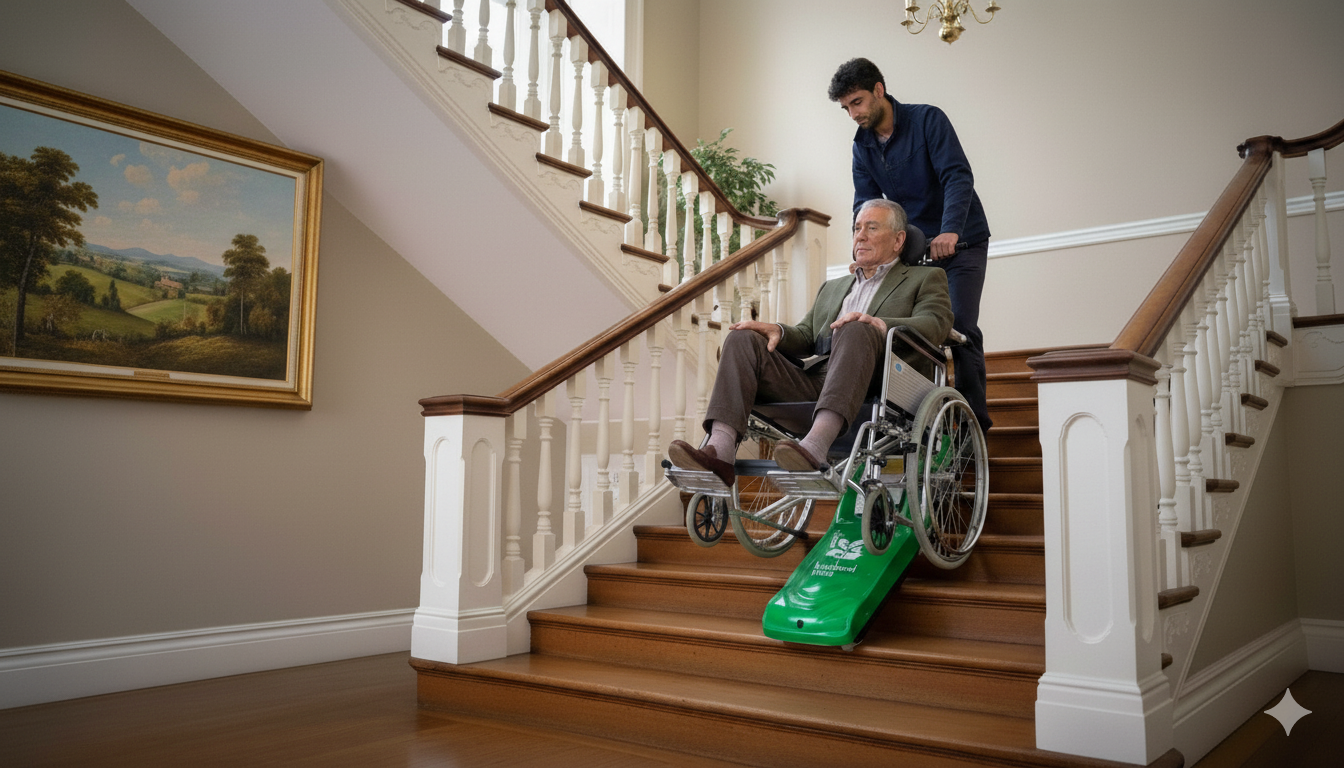

Powered Evacuation Chairs in Bishopsgate, London: Modern Emergency Evacuation for the Heart of the City
Bishopsgate stands at the centre of one of the most important commercial districts in the world. Stretching through the heart of the City of London and connecting major business hubs including Liverpool Street, Broadgate, Spitalfields and the Square Mile, Bishopsgate is home to some of the UK’s most prestigious office towers, financial institutions, insurance companies, legal firms, hotels and commercial developments.
Every day, tens of thousands of employees, visitors, contractors and members of the public move through the buildings that define the Bishopsgate skyline. From landmark towers such as 22 Bishopsgate and the surrounding high-rise developments to historic commercial buildings and luxury hospitality venues, the area represents one of the most densely occupied business environments in Europe.
With this concentration of people comes a significant responsibility. Organisations operating within Bishopsgate must ensure that every occupant can evacuate safely during an emergency, including those who cannot use stairs independently.
As a result, Powered Evacuation Chairs are becoming an increasingly important part of emergency evacuation planning across Bishopsgate and the wider City of London. While traditional evacuation chairs continue to offer a proven and reliable solution, Powered Evac Chairs and Powered Stairclimbers are helping organisations enhance safety, reduce manual handling risks and support more inclusive evacuation procedures.
At the same time, the growing importance of PEEPs, RPEEPs, GEEPs and BEEPs has encouraged organisations to rethink how they prepare for emergency situations. Effective evacuation planning is no longer simply about meeting compliance requirements. It is about ensuring that evacuation strategies are practical, realistic and capable of protecting every building occupant when they are needed most.
Why Emergency Evacuation Planning Matters in Bishopsgate
Few areas of the United Kingdom present evacuation challenges on the same scale as Bishopsgate.
The district contains some of London’s tallest office buildings, accommodating thousands of occupants across multiple floors. Large financial institutions, technology companies, professional services firms and international businesses all operate from buildings where lifts may become unavailable during emergencies, leaving staircases as the primary means of escape.
For individuals with mobility impairments, temporary injuries, long-term health conditions or age-related mobility challenges, stair evacuation can present considerable difficulties.
This creates a clear need for robust evacuation planning.
A successful evacuation strategy ensures that everyone has a safe route to a place of safety. It also ensures that staff responsible for assisting others have access to the right training and equipment.
In modern commercial environments, this increasingly means considering whether Powered Evacuation Chairs or Powered Stairclimbers can provide additional support compared to traditional evacuation methods.
Traditional Evacuation Chairs Continue to Play an Important Role
Traditional evacuation chairs remain one of the most widely used evacuation solutions throughout the UK.
They have supported safe emergency evacuation for many years and continue to offer significant benefits for organisations of all sizes.
Their strengths are well established.
Traditional evacuation chairs are generally lightweight, compact and easy to store within stairwells, refuge points or designated evacuation locations. They allow trained operators to assist mobility impaired individuals down staircases using controlled friction track systems.
Many Bishopsgate businesses continue to rely on traditional evacuation chairs as part of their wider fire safety strategy.
For buildings with straightforward evacuation routes and trained personnel, traditional evacuation chairs can provide an effective and economical solution.
When incorporated into regular evacuation drills and supported by appropriate maintenance programmes, they remain a valuable tool for emergency preparedness.
However, the demands of high-rise evacuation often require organisations to consider additional solutions.
The Advantages of Powered Evacuation Chairs in High-Rise Buildings
Powered Evacuation Chairs have emerged as one of the most significant developments in evacuation technology.
Unlike traditional systems, Powered Evac Chairs use motorised assistance to support movement on staircases.
This dramatically reduces the physical effort required from operators while improving control throughout the evacuation process.
In an area such as Bishopsgate, where many buildings exceed twenty, thirty or even forty floors, this advantage becomes particularly important.
Evacuating an individual manually down multiple flights of stairs can place considerable strain on operators. During an emergency, fatigue and stress can increase quickly, especially in large-scale evacuations.
Powered Evacuation Chairs help reduce these challenges.
The motorised support enables smoother movement, better control and enhanced operator confidence. This can contribute significantly to safer evacuation outcomes while reducing manual handling risks.
For facilities managers responsible for some of London’s most complex commercial buildings, these benefits are becoming increasingly difficult to ignore.
Why Powered Stairclimbers Are Growing in Popularity
Powered Stairclimbers are also becoming an increasingly common feature of evacuation planning throughout the City of London.
Designed specifically to move individuals safely on staircases, Powered Stairclimbers provide controlled movement while minimising physical demands on operators.
Their value is particularly evident within high-rise office towers and multi-storey commercial developments.
In Bishopsgate, where evacuation routes may involve significant vertical travel, Powered Stairclimbers help organisations address both accessibility and operational challenges.
By reducing the manual effort required during evacuation, they support safer movement for both the occupant and the evacuation team.
This makes Powered Stairclimbers an increasingly attractive option for organisations seeking to strengthen their emergency preparedness arrangements.
The Importance of PEEPs in Modern Workplaces
Personal Emergency Evacuation Plans, commonly referred to as PEEPs, are central to effective evacuation planning.
A PEEP is designed to ensure that an individual who may require assistance during an emergency can evacuate safely.
The plan identifies how the person will be supported, who will assist them, which routes will be used and what equipment will be required.
In Bishopsgate, where organisations employ large and diverse workforces, PEEPs are often a critical component of workplace safety.
The effectiveness of a PEEP depends on whether it can be implemented under real emergency conditions.
Powered Evacuation Chairs can help strengthen PEEPs by reducing operator reliance on physical strength while increasing overall control during evacuation.
For many organisations, this makes the evacuation process more practical and more achievable.
RPEEPs and Residential Developments Near Bishopsgate
Although Bishopsgate is primarily known for its commercial environment, surrounding areas including Spitalfields, Aldgate and parts of Shoreditch contain a growing number of residential developments.
This has increased interest in Residential Personal Emergency Evacuation Plans, known as RPEEPs.
RPEEPs focus on supporting residents who may require assistance during emergency evacuations.
For property managers, landlords and managing agents, ensuring suitable evacuation arrangements are in place is becoming an increasingly important consideration.
Powered Evacuation Chairs can form part of a wider residential evacuation strategy where stair evacuation may be necessary.
Their inclusion demonstrates a commitment to resident safety and inclusive emergency planning.
GEEPs and Visitor Management
Bishopsgate attracts a constant flow of visitors.
Clients, contractors, conference attendees, hotel guests and members of the public regularly access buildings throughout the district.
In many cases, it is not practical to create individual evacuation plans for every visitor.
This is where Generic Emergency Evacuation Plans, or GEEPs, provide valuable support.
GEEPs establish procedures that can be applied to groups of people with similar evacuation requirements.
Powered Evac Chairs support these plans by providing a flexible solution that can be deployed quickly when required.
For buildings with high visitor volumes, this flexibility can be extremely valuable during emergency situations.
Building Emergency Evacuation Plans and Whole-Building Resilience
Building Emergency Evacuation Plans, commonly referred to as BEEPs, provide the overall framework for emergency evacuation.
A BEEP considers building design, occupancy levels, evacuation routes, refuge points, communication procedures, staff responsibilities and evacuation equipment.
For Bishopsgate buildings, comprehensive BEEPs are essential.
The complexity of modern high-rise developments requires detailed planning that considers every aspect of emergency response.
Including Powered Evacuation Chairs and Powered Stairclimbers within a BEEP demonstrates a proactive approach to accessibility and risk management.
It also helps ensure that mobility impaired occupants are fully considered within the wider evacuation strategy.
The Stair Climbing Company and The Evacuation Company Leading Best Practice
As organisations throughout Bishopsgate review their evacuation arrangements, specialist expertise is becoming increasingly important.
The Stair Climbing Company and The Evacuation Company are recognised leaders in the provision of Powered Evacuation Chairs, Powered Stairclimbers and specialist evacuation solutions throughout London and the UK.
Their expertise extends well beyond supplying equipment.
Both organisations support clients with risk assessments, evacuation planning, operator training and the implementation of practical evacuation procedures.
They help organisations develop effective PEEPs, RPEEPs, GEEPs and BEEPs while ensuring equipment selection reflects the realities of the building environment.
The Stair Climbing Company specialises in advanced powered stair climbing technology that supports safer movement on stairs and improves operator confidence.
The Evacuation Company provides specialist evacuation equipment and consultancy services designed to strengthen emergency preparedness across all sectors.
Together, they are helping businesses throughout Bishopsgate develop safer, more resilient evacuation strategies.
Choosing Between Traditional and Powered Solutions
Every building has unique evacuation requirements.
Traditional evacuation chairs continue to provide excellent value and remain highly effective in many situations.
Powered Evacuation Chairs offer additional benefits where building complexity, operator safety and manual handling concerns require enhanced support.
For many Bishopsgate organisations, the most effective solution may involve a combination of both approaches.
This allows equipment to be matched to specific building layouts and evacuation scenarios while maintaining maximum flexibility.
The most important factor is ensuring that evacuation arrangements are based on a thorough assessment of risks, occupants and operational requirements.
The Future of Powered Evacuation Chairs in Bishopsgate
The future of evacuation planning in Bishopsgate is increasingly focused on inclusivity, resilience and operational effectiveness.
As organisations continue to invest in accessibility and employee wellbeing, Powered Evacuation Chairs are becoming a key part of modern emergency preparedness strategies.
Powered Evac Chairs and Powered Stairclimbers help reduce operator strain, improve evacuation control and strengthen the effectiveness of PEEPs, RPEEPs, GEEPs and BEEPs.
Traditional evacuation chairs will continue to play an important role across many environments. However, powered evacuation technology is increasingly being recognised as the preferred solution for complex, high-rise and high-occupancy buildings.
For businesses operating in Bishopsgate, investing in Powered Evacuation Chairs is about more than compliance. It demonstrates a commitment to protecting employees, visitors and occupants while supporting best practice in emergency planning.
With expert guidance from The Stair Climbing Company and The Evacuation Company, organisations across Bishopsgate can create evacuation strategies that reflect the realities of modern building management and provide safer outcomes for everyone.
As demand for Powered Evacuation Chairs, Powered Evac Chairs, Powered Stairclimbers, PEEPs, RPEEPs, GEEPs and BEEPs continues to grow, Bishopsgate is leading the way in demonstrating how innovative evacuation technology can support safer, more inclusive emergency evacuation across London’s most important commercial district.
Key Takeaways
- Bishopsgate requires effective evacuation planning due to its dense business environment and high-rise buildings.
- Powered Evacuation Chairs enhance safety by providing motorized assistance, reducing physical strain on operators during emergencies.
- Organisations must consider Personal Emergency Evacuation Plans (PEEPs), as they ensure support for individuals needing assistance.
- Combining traditional evacuation chairs with powered solutions creates flexible evacuation strategies suitable for various building layouts.
- The future of evacuation planning in Bishopsgate focuses on inclusivity and operational effectiveness, making Powered Evacuation Chairs essential for safety.
Estimated reading time: 9 minutes