

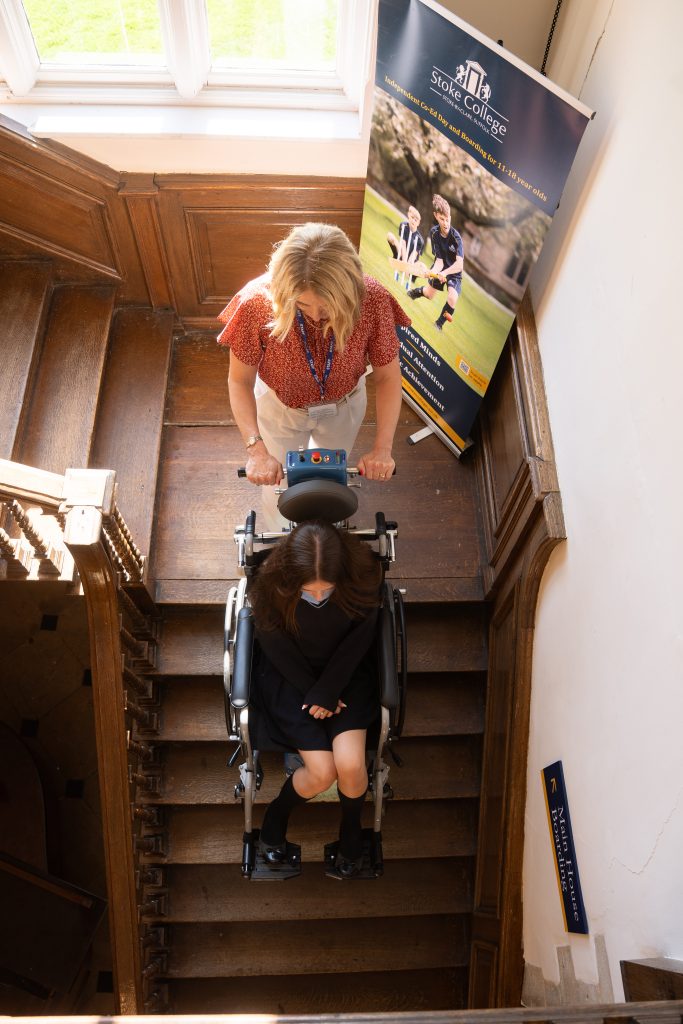
Evac chair training and evacuation chair training for safer buildings
Are your staff ready to support an emergency evacuation? Contact The Evacuation Company to arrange evac chair training, discuss your existing equipment or review your building’s evacuation arrangements. We help organisations connect practical staff training with suitable equipment and clear procedures.
An evacuation chair can provide an essential route to safety for someone who cannot use stairs independently. However, its presence on a staircase does not tell you whether the building is ready. Who will operate it? Can those people reach it quickly? Does it suit the passenger, and can it negotiate the intended route?
Professional evacuation chair training helps answer these questions before an emergency exposes the gaps. It gives staff supervised experience with the equipment and helps managers understand what is needed to turn a written procedure into a workable response.
At The Evacuation Company, we bring training into the wider conversation about inclusive evacuation. This article builds on our pillar post, The Complete Guide to Powered Evacuation Chairs in the UK, with a closer look at the people and practical skills behind effective evacuation arrangements.
Why evac chair training matters
An alarm creates pressure. Staff may be supporting visitors, communicating with colleagues and responding to instructions while other occupants move towards the exits. This is a difficult moment to discover that nobody remembers how to deploy the chair.
Evac chair training gives designated operators the opportunity to practise in controlled conditions. They can ask questions, repeat unfamiliar tasks and understand the limitations of the equipment without the urgency of an actual incident.
The Health and Safety Executive’s guidance on emergency procedures highlights trained and competent people, realistic practice and rehearsed responsibilities as important foundations for a reliable emergency response. HSE
For a facilities manager, the practical implication is straightforward. Training should produce people who can perform their assigned role, alongside a plan that makes those people available when needed. A certificate helps record learning, but readiness also depends on equipment condition, staffing and the escape route.
Start with the building and its occupants
Before booking evacuation chair training, consider what the chair is expected to achieve. A short descent from a first-floor office is different from an evacuation involving several floors, tight landings or an occupied basement.
The assessment should consider staircase dimensions, turning space, doors, storage positions and the destination beyond the stairs. A chair that reaches the bottom landing still needs a clear onward route to the agreed place of safety.
The people using the building matter equally. Some may transfer comfortably into a chair. Others may need specialist seating, additional support or a different evacuation method. Temporary injuries can also create needs that were absent when the original plan was written.
Our equipment access audits and evacuation planning service can help organisations examine these requirements. Understanding the task first makes it easier to choose relevant training and identify equipment that suits the actual environment.
What evacuation chair training should cover
A useful training session connects equipment operation with the building’s procedure. Operators should understand where the chair is stored, how assistance is requested and how their role fits alongside fire wardens or other nominated staff.
Practical instruction should cover the manufacturer’s operating requirements, deployment, checks before use, passenger preparation, restraints and controlled movement. The number of operators and the methods taught must match the specific model and assessed task.
Training should also address communication. Staff need to explain what will happen, listen to the passenger and coordinate their actions with colleagues. Unclear instructions can undermine confidence even when the equipment itself is suitable.
There should be time for supervised repetition and feedback. Watching a trainer once is different from demonstrating the procedure yourself. Where someone needs further support, the organisation should make that visible and arrange additional instruction before relying on them as an operator.
Connect training with PEEPs and visitor arrangements
A Personal Emergency Evacuation Plan, usually called a PEEP, sets out arrangements for an individual who needs assistance. Where the plan includes an evacuation chair, the training must support the procedure it describes.
The person concerned should be involved. Their knowledge of transfers, positioning, pain, fatigue or communication needs can reveal problems that a generic form misses. An evacuation method should not be chosen simply because someone uses a wheelchair.
The Government’s means of escape for disabled people guidance explains that evacuation arrangements should include disabled occupants and should not depend on Fire and Rescue Service intervention to make the plan work. GOV.UK
Visitor arrangements require attention too. Hotels, universities, offices and venues may welcome people whose needs are unknown beforehand. Generic emergency evacuation arrangements, often described as GEEPs, should give staff a clear way to identify assistance requirements and respond appropriately.
Choosing between manual and powered equipment
Manual evacuation chairs can be appropriate for assessed downward escape routes. Their suitability depends on the chair’s design, the stairs, the passenger and the operators available.
Some buildings require a different approach. A basement may need upward evacuation, while longer routes can increase demands on staff. Certain powered models offer assisted upward and downward travel, subject to their specifications and the site assessment.
Powered equipment requires its own training. Operators need to understand controls, battery readiness, operating limits and the manufacturer’s procedure if the equipment develops a fault.
Some specialist systems can accommodate a compatible wheelchair so the passenger remains in their own seating. This is a distinct equipment option, not a feature of every powered chair. Our powered evacuation solutions and powered evacuation chair pillar guide explain the wider choices available. The Evacuation Company The Evacuation Company
Protecting dignity during assisted evacuation
An evacuation involves a person who may already feel anxious about the alarm, the stairs or being moved by unfamiliar staff. Training should help operators respond with calm, respectful communication.
Speaking directly to the passenger, explaining the next action and listening to concerns all help. Staff should avoid assuming that a person cannot understand instructions because they have a physical disability.
Transfers require particular care. If a passenger cannot transfer safely using the agreed method, staff need an assessed alternative. Lifting someone into an unsuitable chair is not a gap that confidence alone can solve.
Practice should also be planned sensitively. An individual should not be pressured into repeated transfers or stair descents for the convenience of a training exercise. A suitable volunteer or training aid may allow staff to learn while protecting the person whose plan is being developed.
Train enough people for every operating period
A building can have several trained operators on paper and still have nobody available at the relevant time. Annual leave, sickness, hybrid working and changing shift patterns can all affect coverage.
Managers should examine who is present during each operating period. A school evening event, a hotel night shift and a university weekend session may have very different staffing from the normal working day.
Where an organisation shares premises, responsibilities need to be agreed with the other occupiers and building management. Staff should not assume that another tenant’s trained team will automatically provide assistance.
Consider a hypothetical office where the only two trained operators both work remotely on Fridays. The equipment has not changed, but the plan has a predictable gap. Reviewing availability alongside evac chair training helps identify this before anyone needs the chair.
Refresher training and changes in risk
Evacuation equipment may rarely be used outside training. Skills can become unfamiliar, particularly when staff have had little opportunity to practise.
The Government’s workplace fire safety guidance on drills and training says new staff need training when they start work and employees must be told about new fire risks. Its guidance also recommends carrying out and recording at least one fire drill each year. gov.uk
The timing of specialist evacuation chair refresher training should reflect the risk assessment, manufacturer’s instructions and staff competence. An annual review can provide a useful checkpoint, with further instruction arranged sooner where circumstances require it.
A replacement chair, altered route, new passenger requirement or change of operators should trigger a review. Familiarity with one model should not be treated as proof that someone can safely operate another without appropriate instruction.
Use drills to test the complete procedure
Training develops equipment skills. A drill helps test whether the surrounding arrangements work.
An exercise can reveal how long it takes to contact the operators, whether they can access the chair and whether communication remains clear. It may also expose awkward doors, cluttered storage or confusion about the onward route.
The exercise should be planned and risk assessed. It does not have to involve moving every person who needs assistance down a staircase. Simulating selected stages can test coordination while avoiding unnecessary transfers or physical demands.
Afterwards, record what happened and assign responsibility for improvements. If staff could operate the chair but nobody knew where to meet the passenger, the equipment lesson has succeeded while the wider procedure still needs attention. Both findings are useful.
Keep equipment ready between training sessions
Training cannot compensate for defective equipment. Equally, a recently serviced chair cannot replace operators who understand how to use it.
The HSE’s PUWER guidance provides information on work equipment inspection, maintenance, training and competence. These are connected considerations for organisations managing evacuation equipment at work. HSE
Routine checks should follow the manufacturer’s instructions and the organisation’s maintenance arrangements. Staff should know how to report damage, missing parts or faults and what to do when a chair is unavailable.
Powered equipment adds charging and battery management responsibilities. Assigning these tasks helps avoid a situation where everyone assumes somebody else has checked readiness. The Evacuation Company’s equipment servicing service can support planned maintenance alongside staff training.
Group courses and train the trainer support
Different organisations need different training arrangements. A small team may benefit from a focused group session, while a larger employer may need several sessions to cover departments and shifts.
The Evacuation Company offers equipment training through individual, group and train the trainer options. We can also discuss training for suitable equipment already in place. The Evacuation Company The Evacuation Company
For organisations choosing an internal trainer route, governance matters. Managers should define which equipment the trainer can teach, how competence will be checked and how updates will reach them.
Internal delivery also needs time in the working schedule. Naming a trainer without giving them time to teach new starters or maintain their own skills can leave the intended programme unfinished. The right arrangement is the one your organisation can sustain.
Make training records useful
A useful record should identify the operators, equipment covered, training date and any follow-up required. This helps managers understand capability rather than simply count certificates.
Connecting records with shift coverage makes gaps easier to see. Linking them to equipment locations also helps when chairs are moved, replaced or taken out of service.
People responsible for evacuation should know how to raise concerns. A hesitant operator, changing passenger requirement or awkward route deserves attention before the next scheduled review.
This makes evacuation chair training part of routine building management. It gives staff a clear way to maintain the procedure and helps prevent changes from quietly weakening arrangements that previously worked well.
Arrange evac chair training with The Evacuation Company
Effective evac chair training brings people, equipment and procedures together. It helps staff understand their role and gives managers a clearer view of what their building needs.
Whether you manage an office, school, university, hotel, healthcare setting or heritage venue, begin with the occupants and the assessed escape arrangements. Choose suitable equipment, train the operators and keep the procedure under review.
The Evacuation Company can discuss practical training, existing equipment, powered options, evacuation planning and servicing. For broader equipment guidance, read our Complete Guide to Powered Evacuation Chairs in the UK.
Contact The Evacuation Company today to arrange evacuation chair training and take the next step towards a practical, well-supported evacuation plan.
Key Takeaways
- Evac chair training equips staff for emergencies, ensuring they can safely operate equipment and follow procedures.
- Effective training prepares designated operators through practice, improving confidence and teamwork during an evacuation.
- Organizations should assess their buildings and occupants to tailor training and equipment to specific emergency needs.
- Training must include clear communication, proper operation, and coordination with personal emergency evacuation plans (PEEPs).
- Regular refresher training and drills test the entire evacuation procedure, maintaining readiness and identifying any gaps.
Estimated reading time: 10 minutes
Table of contents
- Evac chair training and evacuation chair training for safer buildings
- Why evac chair training matters
- Start with the building and its occupants
- What evacuation chair training should cover
- Connect training with PEEPs and visitor arrangements
- Choosing between manual and powered equipment
- Protecting dignity during assisted evacuation
- Train enough people for every operating period
- Refresher training and changes in risk
- Use drills to test the complete procedure
- Keep equipment ready between training sessions
- Group courses and train the trainer support
- Make training records useful
- Arrange evac chair training with The Evacuation Company