

Estimated reading time: 1 minute
Supporting compliance and building confidence in emergency response
Would your team know what to do if someone needed assistance during an emergency or lift failure? Book a free assessment with The Evacuation Company to review your plans and equipment.
| Project | One Bartholomew Square |
| Sector | Commercial offices and higher education |
| Location | London, England |
| Building manager | Ashdown Phillips |
| Project partners | Chicago Booth, The Trade Desk (UK) and Ashdown Phillips |
| Provider | The Evacuation Company |
| Requirement | Coordinated evacuation provision and arrangements for lift failure |
| Solution | Evacuation plans, evacuation chairs and powered evacuation chairs |
Project background
At One Bartholomew Square in London, The Evacuation Company completed a project bringing together evacuation planning and specialist equipment. Working with building manager Ashdown Phillips, Chicago Booth and The Trade Desk’s UK team, we provided evacuation plans, evacuation chairs and powered evacuation chairs to support people who may need assistance.
The aim was to support compliance while giving the teams confidence in what needed to happen during an emergency or lift failure. By connecting the plans with suitable equipment, the project gave those involved a clearer basis for responding when normal movement through the building was disrupted.
The evacuation challenge
In a building occupied by different organisations, evacuation arrangements need to work across the building management team and individual occupiers. People may need assistance in tenant areas and on shared routes, so a coordinated approach is essential.
Lift failure presents a related challenge. A person who normally uses a lift may need an alternative way to move between levels. The project therefore addressed emergency evacuation alongside contingency provision for periods when normal lift access is unavailable.
The evacuation solution
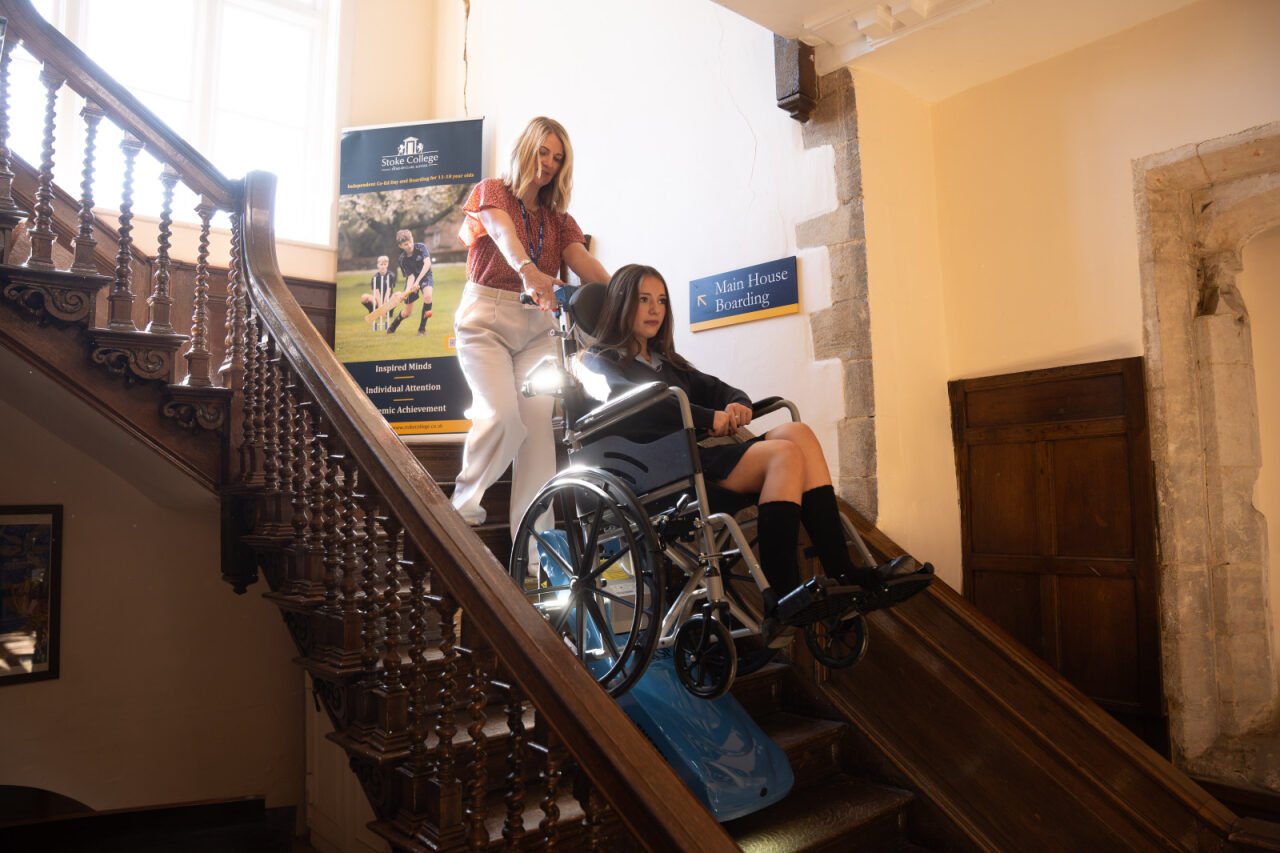
Our solution combined evacuation planning with the supply of evacuation chairs and powered evacuation chairs. These elements were considered together so the building’s arrangements were supported by equipment that could be used to assist people on stairs.
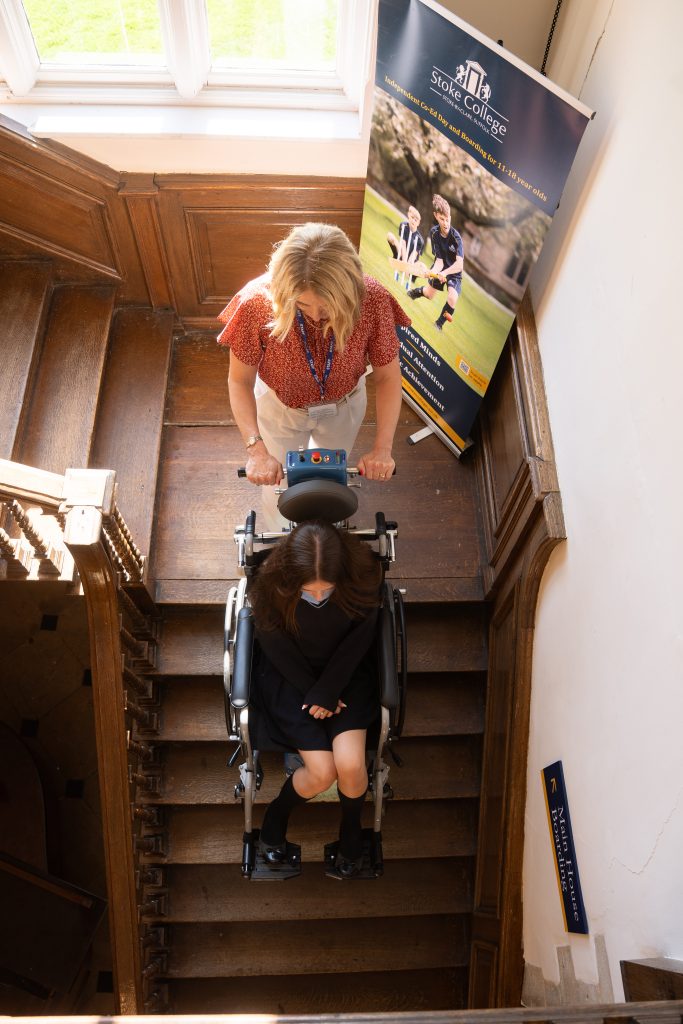
Providing both conventional and powered options gave the project a broader range of assisted movement solutions. The appropriate option depends on the person, the route and the task, rather than assuming that a single type of chair will meet every requirement.
Evacuation plans connected to practical provision
The evacuation plans were a central part of the completed project. They provided the framework for understanding how assistance would fit into the wider response, with the supplied equipment supporting that provision.
Effective plans need to make responsibilities, communication and routes clear. Where an individual has specific assistance needs, a Personal Emergency Evacuation Plan can set out arrangements suited to that person. These individual arrangements should align with the building’s overall evacuation strategy.
Evacuation chairs and powered evacuation chairs
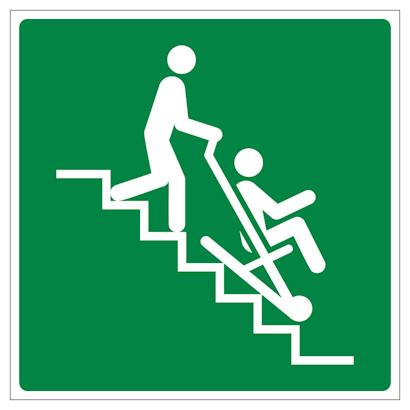
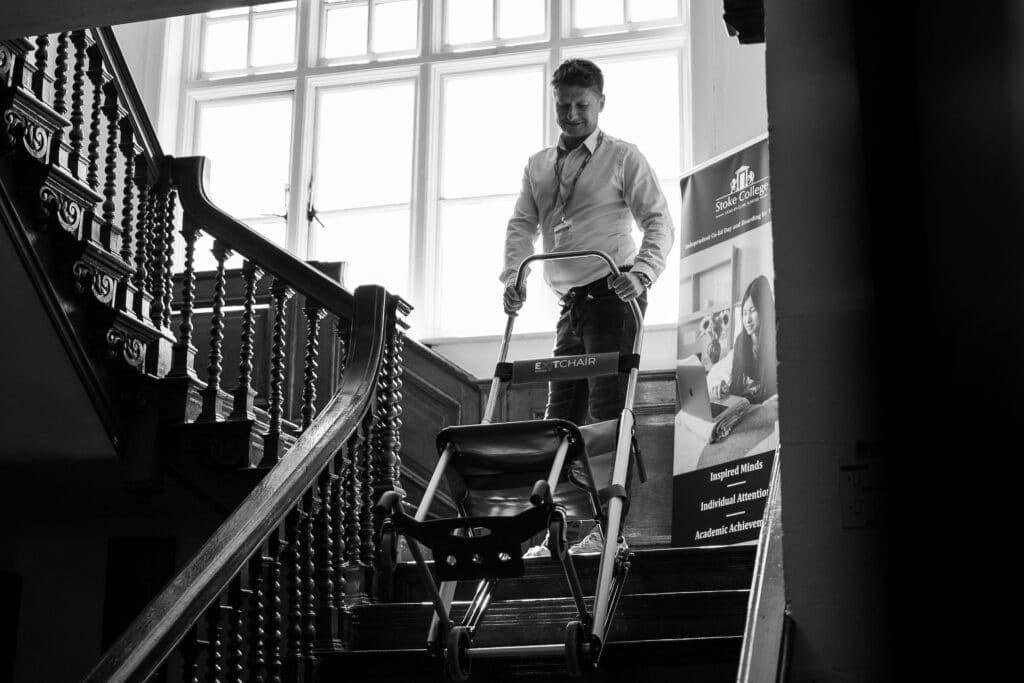
We supplied evacuation chairs alongside powered evacuation chairs for the project. Conventional evacuation chairs can support assisted descent on suitable stairs, while powered equipment provides additional options where the assessed task calls for motorised assistance.
Equipment selection must take account of the passenger’s needs, any transfer involved, staircase suitability and the manufacturer’s operating limits. Powered capability varies by model, so the planned use must match the equipment supplied. The result is a more considered approach to assisted evacuation than choosing equipment in isolation from the plan.
Preparing for lift failure
The provision also addressed situations where a lift is unavailable. Having evacuation equipment and a plan for assisted movement gives teams an alternative to consider when someone cannot use the stairs independently.
A lift breakdown and a fire emergency require different decisions. During a breakdown, assistance can be organised around the person’s needs and the assessed route. During a fire emergency, the response must follow the building’s evacuation strategy and the conditions at the time. Planning for both situations helps teams understand which arrangements apply.
Working across the building
Collaboration with Ashdown Phillips, Chicago Booth and The Trade Desk was central to the outcome. Bringing building management and occupiers into the same project helped connect building arrangements with the needs of the organisations using the space.
This shared approach supported a clearer understanding of the evacuation provision and how the plans and equipment fitted together. It also gave the project a common purpose: helping people receive appropriate assistance when they need it.
Assessment and operating arrangements
Confidence in evacuation provision depends on practical readiness. Equipment must be suitable for its intended use, and the people expected to operate it need the competence and availability to do so. Plans should remain accessible to those who need them and reflect the current building arrangements.
Evacuation chair training and equipment servicing help maintain that readiness over time. Regular review is also important when occupants, assistance needs, staffing or escape routes change.
Government guidance on means of escape for disabled people reinforces the importance of coordinating evacuation arrangements in buildings with multiple occupiers. Equipment, planning and competent assistance need to work together within the wider fire safety arrangements.
Project outcome
The completed project gave One Bartholomew Square evacuation plans supported by evacuation chairs and powered evacuation chairs. Working with Ashdown Phillips, Chicago Booth and The Trade Desk, we helped strengthen the building’s provision for people who may need assistance during an emergency or lift failure.
The outcome extended beyond supplying equipment. The teams gained confidence in understanding what needed to happen and how the provision supported their response. This connected approach supported compliance and made the arrangements more meaningful to the people responsible for putting them into practice.
For the building manager and participating occupiers, the benefit was a coordinated package of plans and equipment, developed through collaboration. For people who may need assistance, it meant their needs were considered as part of the building’s emergency and contingency arrangements.
Lessons for other buildings
One Bartholomew Square demonstrates the value of bringing building managers and occupiers together when planning assisted evacuation. A shared understanding helps connect the building’s procedures with the needs of the people using it.
For facilities managers, managing agents and employers, the practical lesson is to consider plans and equipment together. Clear arrangements, suitable chairs and people who understand their responsibilities provide a stronger foundation for a confident response.
Arrange an assessment
The Evacuation Company helps organisations review evacuation arrangements and select appropriate equipment. If your building needs evacuation plans, evacuation chairs, powered evacuation chairs or a lift failure contingency, book a free assessment to discuss your requirements.
Key Takeaways
- The Evacuation Company provided evacuation plans and chairs for One Bartholomew Square to enhance emergency response.
- This project focused on assisting individuals during emergencies and lift failures with suitable equipment.
- Collaboration among building management and tenants ensured coordinated evacuation arrangements.
- Evacuation planning connected to the provision of both conventional and powered evacuation chairs improved overall safety.
- The project highlighted the importance of regular assessments and training to maintain readiness and compliance.