

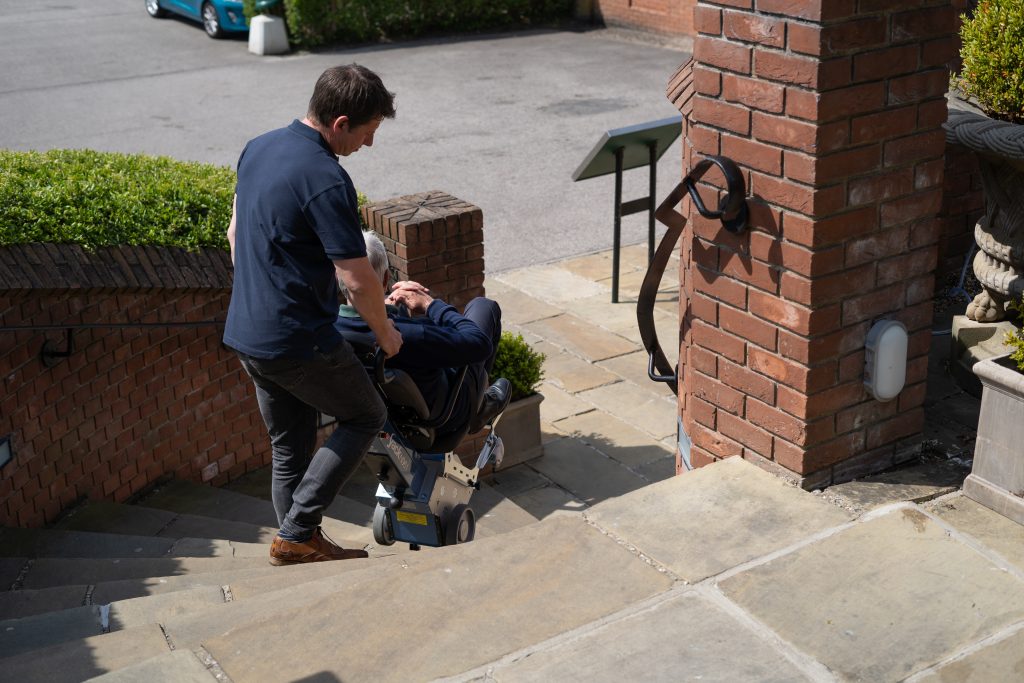
Evacuation Chairs in High Rise Buildings: Why Real Emergency Planning Saves Lives
SEO Title
Evacuation Chairs for High Rise Buildings: Why Evacuation Chair Training Is Essential
Meta Description
Learn why evacuation chairs and evacuation chair training are critical in high rise buildings. Discover how the Grenfell Tower Inquiry reshaped emergency evacuation responsibilities and why realistic evacuation planning matters.
Focus Keyphrase
Evacuation chair training
Secondary Keyphrases
Evacuation chairs
Evacuation chair training in London
High rise building evacuation
Emergency stair evacuation
PEEP evacuation planning
High Rise Building Safety Has Changed Forever
The way organisations approach emergency evacuation has fundamentally changed since the Grenfell Tower tragedy.
For decades, many high rise buildings relied heavily on theoretical evacuation policies that looked compliant on paper but failed to address the realities of emergency evacuation for vulnerable occupants.
The Grenfell Tower Inquiry exposed critical failures in communication, fire safety management, evacuation planning, and emergency preparedness. One of the clearest lessons was that evacuation procedures must be realistic, inclusive, and operational under real world conditions.
Today, evacuation chairs and professional evacuation chair training are becoming central to responsible high rise building management.
Whether in residential towers, commercial offices, hospitals, hotels, or mixed use developments, building operators must now demonstrate that all occupants can evacuate safely during emergencies.
Why High Rise Buildings Present Unique Evacuation Risks
High rise buildings create evacuation challenges that do not exist in low level properties.
During fires or power failures:
- Lifts are typically unavailable
- Stairwells become congested
- Visibility may be reduced
- Occupants may panic
- Communication becomes difficult
- Emergency access routes may narrow rapidly
For individuals with reduced mobility, these risks increase significantly.
Without a realistic evacuation strategy, vulnerable occupants may become trapped or dependent on rescue services arriving under extremely difficult conditions.
This is why evacuation chairs are so important.
They provide a practical method for safely moving individuals down staircases during emergencies when lifts cannot be used.
The Grenfell Tower Inquiry and the Importance of Inclusive Evacuation
The Grenfell Tower Inquiry highlighted serious concerns regarding evacuation planning for residents who could not self evacuate.
The Inquiry reinforced the need for emergency strategies that genuinely account for all occupants, not just those who can evacuate independently.
The Government has since introduced further scrutiny around building safety through measures including:
- The Fire Safety Act 2021
- The Building Safety Act 2022
- Enhanced fire risk assessment expectations
- Greater accountability for responsible persons
You can review official guidance on fire safety responsibilities here:
Further information on building safety reforms is available here:
The focus has shifted from symbolic compliance towards practical risk management.
This means organisations must now think carefully about how emergency evacuation procedures actually function in practice.
What Is an Evacuation Chair?
An evacuation chair is a specialist device designed to help trained operators safely evacuate individuals with reduced mobility down staircases during emergencies.
Modern evacuation chairs use friction controlled systems that allow operators to guide the chair safely down stairs while maintaining stability and reducing physical strain.
Evacuation chairs are commonly installed in:
- High rise residential blocks
- Commercial office towers
- Hospitals and healthcare facilities
- Universities and schools
- Hotels
- Shopping centres
- Public buildings
- Transport hubs
However, simply owning the equipment is not enough.
Without proper evacuation chair training, the equipment may not be used safely or effectively during an emergency.
Why Evacuation Chair Training Is Essential
Emergency evacuations happen under pressure.
Operators may face:
- Smoke filled environments
- Limited visibility
- Noise and confusion
- High stress conditions
- Time critical decision making
- Physically demanding stair descents
Professional evacuation chair training prepares staff to respond confidently during these situations.
Training typically includes:
- Safe chair deployment
- Passenger transfer techniques
- Stair descent control
- Emergency communication
- Equipment safety checks
- Operator positioning
- Risk awareness
- Team coordination
Most importantly, practical training helps eliminate hesitation during emergencies.
Confidence and familiarity can make a critical difference when every second matters.
Why Evacuation Chair Training in London Is Increasingly Important
Demand for evacuation chair training in London continues to rise as organisations face increasing pressure to demonstrate effective emergency preparedness.
London contains thousands of high occupancy buildings including:
- High rise apartments
- Corporate headquarters
- Historic commercial properties
- Public sector facilities
- Educational institutions
- Healthcare sites
- Hospitality venues
Many of these buildings involve complex evacuation environments with narrow stairwells, multiple floors, and large numbers of occupants.
This makes realistic evacuation planning essential.
Professional evacuation chair training in London helps organisations ensure that emergency procedures are workable, compliant, and inclusive.
Token Emergency Planning Creates Dangerous Risks
One of the most persistent problems across the UK remains the tokenisation of emergency evacuation planning.
Some organisations focus heavily on documentation while neglecting practical capability.
For example:
- Evacuation chairs may remain unused in storage cupboards
- Designated operators may never practice stair descents
- Staff may not know evacuation routes
- PEEPs may be outdated or incomplete
- Emergency drills may ignore mobility evacuation entirely
This creates a false sense of security.
During a real emergency, paperwork alone cannot evacuate people safely.
Only realistic preparation can do that.
Personal Emergency Evacuation Plans Must Be Practical
Personal Emergency Evacuation Plans, commonly called PEEPs, are designed to identify how individuals requiring assistance will evacuate during emergencies.
However, a PEEP without properly trained staff or suitable evacuation equipment is ineffective.
Effective PEEPs should include:
- Named trained personnel
- Suitable evacuation chairs
- Clear evacuation routes
- Communication procedures
- Refuge arrangements
- Backup contingencies
- Regular reviews and drills
The Health and Safety Executive provides emergency planning guidance here:
Common Mistakes High Rise Buildings Still Make
Despite greater awareness, many organisations continue to make critical evacuation planning mistakes.
Assuming Refuge Areas Solve the Problem
Refuge points are temporary safety locations, not permanent evacuation solutions.
Failing to Train Enough Operators
Emergencies may occur during staff shortages or absences.
Neglecting Visitors and Contractors
Temporary occupants may also require evacuation support.
Ignoring Equipment Maintenance
Evacuation chairs require regular inspection and servicing.
Treating Training as a One Time Exercise
Competence must be maintained through refresher training and drills.
Why Regular Refresher Training Matters
Evacuation chair skills can deteriorate if they are not practiced regularly.
Staff turnover, building changes, and evolving risks all affect emergency preparedness.
Regular refresher training helps organisations:
- Maintain operator confidence
- Reinforce safe techniques
- Update evacuation procedures
- Identify operational weaknesses
- Improve emergency coordination
Many organisations now incorporate annual evacuation chair training into their wider fire safety programmes.
Choosing the Right Evacuation Chair
Not every evacuation chair suits every building.
Factors that influence equipment selection include:
- Staircase design
- Landing space
- Building height
- Occupancy profile
- Operator capability
- Storage requirements
- Weight capacity
- Frequency of use
Professional assessments can help organisations identify the most suitable evacuation chairs and training requirements for their building environment.
Building Safety Requires More Than Compliance
The Grenfell Tower tragedy demonstrated the devastating consequences of fragmented safety culture.
Real building safety requires organisations to move beyond minimum compliance and focus on operational reality.
Responsible persons should ask:
- Can vulnerable occupants evacuate safely today?
- Have evacuation procedures been tested realistically?
- Are operators genuinely confident?
- Is equipment accessible and maintained?
- Are emergency plans inclusive?
These questions cannot be answered through paperwork alone.
They require practical preparation.
The Ethical Responsibility of Emergency Planning
Emergency evacuation is not only a legal issue. It is a moral responsibility.
People entering a building trust that reasonable safety measures are in place.
This trust extends to everyone, including:
- Disabled occupants
- Elderly individuals
- Injured personnel
- Pregnant occupants
- Visitors unfamiliar with the building
Evacuation chairs and professional evacuation chair training help organisations fulfil this responsibility in a meaningful way.
Why Demand for Evacuation Chair Training Will Continue to Rise
Several factors are driving growing demand for evacuation chair training across the UK:
- Higher scrutiny following Grenfell
- Increased focus on inclusive safety
- Expansion of high rise developments
- Greater enforcement expectations
- Corporate liability concerns
- Improved understanding of mobility risks
For organisations operating in urban areas, especially those requiring evacuation chair training in London, practical emergency preparedness is becoming an essential operational priority.
Final Thoughts
High rise building evacuation is one of the most complex challenges in modern fire safety management.
The Grenfell Tower Inquiry exposed the risks of treating emergency planning as a paperwork exercise rather than a practical responsibility.
Evacuation chairs and evacuation chair training are now critical components of inclusive building safety.
Responsible organisations understand that genuine preparedness requires:
- Practical training
- Realistic drills
- Competent operators
- Suitable equipment
- Continuous review
- Inclusive evacuation planning
Because when emergencies happen, preparation must work in reality, not just in policy documents.
Suggested Internal Links
- High Rise Fire Safety Services
- Evacuation Chair Installation
- Emergency Evacuation Assessments
- Fire Warden Training
- PEEP Development Services
- Building Compliance Audits
Suggested External Authority Links
https://www.gov.uk/workplace-fire-safety-your-responsibilities
https://www.gov.uk/government/collections/building-safety-act
https://www.hse.gov.uk/
https://www.london-fire.gov.uk/
https://www.britsafe.org/
Image Alt Text Suggestions
- Evacuation chair training in high rise building
- Emergency stair evacuation procedure
- Fire safety evacuation chair demonstration
- High rise evacuation chair equipment
- Mobility evacuation during emergency drill
FAQ Section
What are evacuation chairs used for?
Evacuation chairs help safely transport individuals with reduced mobility down staircases during emergencies.
Why is evacuation chair training important?
Training ensures operators can safely and confidently use evacuation chairs during high pressure emergency situations.
Are evacuation chairs required in high rise buildings?
Requirements depend on building risks and occupant needs, but responsible persons must provide safe evacuation arrangements for all occupants.
How often should evacuation chair training take place?
Most organisations conduct annual refresher training to maintain operator competence.
Why is evacuation chair training in London particularly important?
London contains many high occupancy and high rise buildings where stair evacuation planning is essential for inclusive emergency preparedness.
Key Takeaways
- Evacuation chair training is essential in high rise buildings to safely transport individuals with reduced mobility during emergencies.
- The Grenfell Tower Inquiry highlighted the need for realistic and inclusive evacuation planning for all occupants.
- High rise buildings pose unique evacuation risks, such as lift unavailability and stairwell congestion, especially during emergencies.
- Regular refresher training ensures that operators remain competent and confident in using evacuation chairs under pressure.
- Demand for evacuation chair training continues to rise in London due to increasing safety scrutiny and the complexity of high occupancy buildings.
Estimated reading time: 8 minutes